| [**1. Overview**](#bkmrk-section-1%3A-overview) What are the FPIs? History of the FPIs | [**2. A feminist approach to the internet**](#bkmrk-section-2%3A-a-feminis) What is a feminist approach to the internet? Why use a feminist approach? | [**3. Clusters**](#bkmrk-section-3%3A-clusters) The clusters’ relations with different manifestations of power The interrelatedness of clusters | [**4. Examples of the FPI’s relevance to your context**](#bkmrk-section-4%3A-examples-) Either cluster by cluster, or related to a specific cluster on which you would like to focus your conversation |
**[https://feministinternet.org/](https://feministinternet.org/)** Access the FPI website for information about the FPIs, including their history, an articulation of the clusters, and examples of their use in different contexts around the world! Below are some important points that you can consider including in your presentation of the FPIs.
#### **Section 1: Overview** ##### What are the FPIs? When giving an overview of what the principles are, it is important to emphasise that they do not exist in isolation but are grounded in contextual politics that defines the internet we want. As such, they are: - a set of political commitments that informs our approach to our activism, both locally and globally, and - a framework to articulate and explore current issues related to technology, helping us to identify connections between what is happening across local contexts, and between what is happening globally, regionally and locally. ##### History of the FPIs 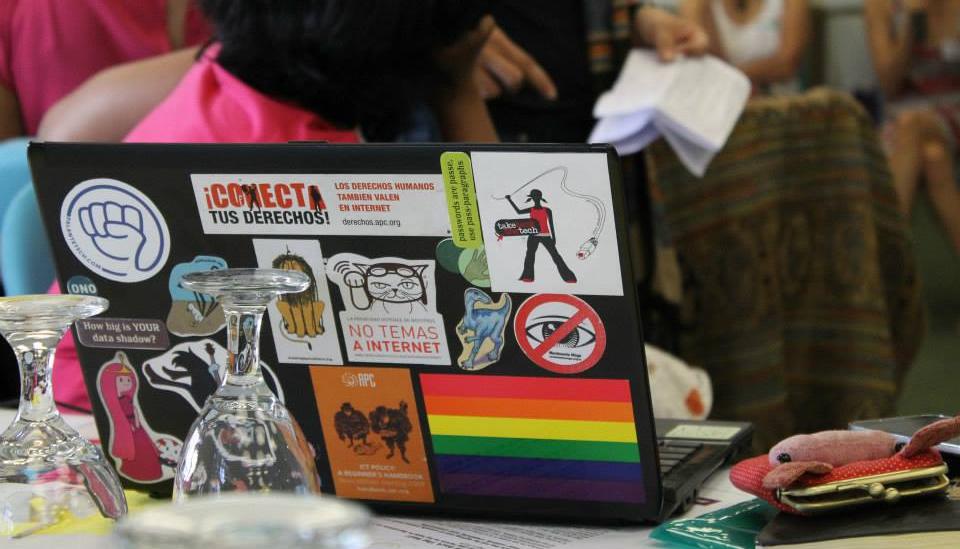 The FPIs were originally drafted at a global meeting on gender, sexuality and the internet organised by the Association for Progressive Communications (APC), held in Port Dickson, Malaysia in 2014 by women’s, sexual rights and digital rights activists from the global South. The FPIs are feminist not only in their demands, but in how they came to be! The history of the FPIs is therefore intrinsic to the politics of the FPIs themselves. It is important to note that: - They were formed out of a participative process of Open Space dialogue that sought to explore the question, ‘As feminists, what kind of internet do we want, and what will it take for us to achieve it?’ - The FPIs were created as a resistance to the homogenising and patriarchal way in which key technology-related issues that affect feminist organising were being framed. We wanted a global South feminist framework for exploring and articulating these issues. #### **Section 2: A feminist approach to the internet** ##### What is a feminist approach to the internet? A feminist approach to the internet requires the consideration of two key concepts: - **Intersectionality**: You’ve heard the phrase, “There is no such thing as a single-issue struggle, because we do not live single-issue lives” (Audre Lorde). Intersectionality does not only consider the multifaceted nature of human identity, but also how social and political structures make certain identities vehicles for power or for vulnerability. - **Contextual relevance**: The lens through which we seek to identify and address internet-related challenges is useless if it does not respond to the needs and priorities of those most impacted. A feminist approach to the internet recognises that we are the experts of our own lives, and that lived experience is a critical repository of knowledge. It ensures that the lived experiences of women, gender-diverse and queer folk remain at the centre of our interrogation and decision-making in relation to the internet. ##### Why use a feminist approach to the internet? The FPIs, as a feminist approach to the internet, offer a lens that uncovers the **deeply contextual and intersectional nature** of issues, while at the same time, allows for common concerns across contexts to be surfaced and inform our responses to those concerns. A feminist approach to the internet is important, because it: - Acknowledges that the internet and the spaces within it are not neutral. How the internet is designed enforces and perpetuates our access to power and our vulnerabilities, our inclusion in certain space and our exclusion from others. - Helps us to understand how our identities, privileges and positionalities influence our ability to access and shape the internet. - Provides a politics through which we can centre the lived experiences of women, gender-diverse and queer folk in relation to technology in how we approach decision-making about the internet > “From falling in love to demanding accountability from our government, \[the internet\] is becoming part of the texture of our everyday social, political, economic, and cultural life. It’s not just an inert tool that we wield when we have access to it, but a space where things happen, where identities are constructed, norms reified or disrupted, action and activities undertaken. As such, it cannot help but be a space of intersectionality where many things collide and connect.” – Jac SM Kee #### **Section 3: Clusters** The FPI clusters – access, expression, embodiment, economy and movements – are tools for articulating a framing of power and its intersections with the creation, use and expansion of the internet. ##### Clusters’ relation to different manifestations of power The clusters speak to five manifestations of power related to the internet. - **Access and structural power: **The principles of access question who has power over internet infrastructure, challenge attempts to monopolise structural power, and is a lens through which we can think strategically of how structural power can be decentralised. - **Expression and discursive power:** The internet gives us the capacity to create and share our truths and our knowledge. The principles of expression condemn attempts to take away discursive power from marginalised communities and reveals the damaging effects of online spaces when they are shaped by dominant narratives. - **Economy and economic power:** The principles of economy assert a resistance to corporate control of the internet and creates space for conversations to consider alternative economic models of operation that share and distribute economic power. - **Embodiment and embodied power:** The embodiment principles recognise the power that exists in being able to navigate the internet anonymously, privately and without restriction. The cluster therefore pushes back against all attempts to privatise the internet and confronts corporate and government action to increase surveillance online. - **Movements and networked power:** The internet allows us to connect with one another, expand our networks, organise and grow social movements across space and time. The movements cluster is therefore invested in opening up online civic space, and ensuring that activists are able to participate in the shaping of policies that govern the internet. ##### Interrelatedness of clusters It is important to note that the principles, both within and across the clusters, are interrelated: **they can be combined and refer to one another**. The FPIs are also a continuously evolving vocabulary, remaining open for transformation and reflection. Take a moment to ask your participants, - In what ways are the clusters of principles holding resonance with your own experiences of the internet? - What is missing from the principles? Do you see any gaps? - Can you think of examples in our local history, activism or political environment for which the FPIs can help inform our perspective on those issues? Which cluster or clusters speak to that example? #### **Section 4: Examples of the FPI’s relevance to your context** Giving examples using real-life situations of the FPI’s relevance to your context is an important means for **ensuring participants understand how the FPIs relate to their lives and their activism**. In the next section, we will explore how to select real-life case studies and have a conversation around them. You can choose to include these case studies as part of your presentation, or integrate them into a follow up activity once you have attended to any questions from your participants about the FPIs. If you would like to integrate them into a follow up activity, [check out some fun, feminist methodological processes](https://explorefpi.apc.org/books/explore-fpis-toolkit/page/stories-from-the-field "Stories from the field") that have been used by organisers of local conversations in the past as a way of entering into those conversations, available at the end of this chapter! # How to select and include contextual case studies related to the FPIs| ##### *Reflection exercise!* As you prepare for your conversation, reflect on some of the local issues that you and those around you face in your context related to the internet and digital technologies. For example, - Does your country experience internet shutdowns? - To what extent does your government censor internet content? - Have participants in the room experienced harassment, surveillance, or any form of violence online? - How has the increased use of marketplace databases and on-demand service apps affected the distribution of economic power in your country? - How does the increasing power of big tech companies impact the ability to remain anonymous online? - How do digital technologies enable or restrict local activism? |
**Asking folks about their experiences ensures deeper and more participative conversations!**
So, how do we ask questions about participants’ experiences that entice their curiosity and spark in-depth debate? There are three key factors to consider that will inform the kinds of questions you ask: 1. **Who is in the room?** To what movements, unions, communities or occupations do your participants belong? Are your participants journalists? Coders? Are they abortion rights activists or part of workers’ union? Do your participants represent a gender-diverse community, or are they residents of the same neighbourhood? 2. **Where is the conversations being held?** Is the conversation a national one or a hyperlocal one? What country, city or neighbourhood are you hosting from? Is the conversation taking place online, with folks representing many geographical places, but from a common movement? 3. **What brought you all together to have a conversation about the FPIs in the first place?** What was the purpose negotiated between yourself and your participants at the beginning of your conversation, for bringing you together? What do you collectively want to achieve? Your answers to these questions will help guide your decision around the kinds of questions you ask your participants about their experiences of using technology in their fields of work, activism and lives. For example, if your conversation has journalists present that often face threats or intimidation from government, a question you may ask could be, *‘As a journalist in your country, what apps do you prefer to use to communicate with your sources and why?**’* If your conversation has attracted more of a techie crowd of web developers or coders, a question you could ask is, *‘Have you ever created a pseudonym for yourself online out of a need or desire to be elusive or anonymous? What was it? What was the reason?’* If the conversation becomes generalised, bring participants back to their experiences by asking them to **tell stories** of specific scenarios! As stories are recounted, make a note of each one using a flipchart that folks can see, or a shared online notepad to which everyone has access. For each story, note down the key issue, as well as what happened in the participants’ experiences. #### How to select and have a conversation about case studies By the end of the previous discussion, you would have noted a number of stories from the experiences of different participants. These stories may have expanded conversations to other examples of similar events, or have led participants in the room to discover similarities in their experiences confronting the same issue. **Whether from the lives of participants, or examples given from the floor of similar events, these stories are your case studies!** Take a moment to observe any **commonalities** that are arising in the stories being told, or any similarities in the challenges being surfaced. Depending on the amount of time you have allocated for this part of your conversation, select one or more case studies that seem to have the most resonance among the experiences of participants. It is now time to take the conversation back to the FPIs and how they relate to the experiences that have just been shared. This can be done collectively, or you can split participants into groups to speak about a case study each. For each case study, **ask questions that will lead to exploring and interrogating the issues at hand from a feminist perspective****.** The questions around each case study can include, for example: - To which cluster or principles does the case study relate? Does it relate to a single cluster or principle or is it at the intersection of two or more clusters or principles? - In the selected case study, what technology was involved? - Who was in control? What was their intention? - What was the key barrier / challenge to / opportunity for the FPIs being realised in the case? - Who was most impacted? How? - Did the scenario create more ways and spaces to be / express / organise / gain autonomy online? If so, in what ways? - Did the scenario affect you, either positively or negatively? If so, how? There are numerous methodological processes for drawing out responses to these questions. We have put together **a growing repository of stories from the field**, or methodological processes, that organisers of previous local conversations from around the world have used! Gather ideas from the [next section (Stories from the field)](https://explorefpi.apc.org/books/explore-fpis-toolkit/page/stories-from-the-field "Stories from the field")! # Stories from the field #### Cape Town, South Africa: In 2016, a local conversation was held in Cape Town, South Africa on the Feminist Principles of the Internet and the use of ICTS for movement building. The participants included folks from sex workers movements, digital rights activists and girl-led young women’s rights collectives. In a conversation specifically about *access*, one case study the conversation explored was sex workers’ use of mobile phones for preventing gender-based violence. **Case study: **Sex workers, especially those who work on the street, are frequently subjected to harassment, abuse and assault from their clients and the police. As a result, those working in the same or nearby neighbourhoods have organised by creating WhatsApp groups in which they share details, such as car and person descriptions, of abusive clients or alert their colleagues of police presence. Sex workers’ access to such communication hubs of crowdsourced information has played a role in preventing their exposure to violence. **Methodological process: **As a means of opening up discussion around the case study, the sex workers in the room created a talkshow-style activity, which they set up in front of the other participants, who were the audience. One sex worker, as the host, interviewed their colleagues, asking them questions around how they use their phones to protect themselves from violence, and invited them to tell stories of moments in which it proved effective. After the activity, the plenary discussion that followed not only led participants to consider how access to mobile phones, in the case of sex workers confronting violence, was crucial for sex workers’ safety, but also how that access led to possibilities for collective organising, support and solidarity.