# Explore FPIs Toolkit
# Introduction
Welcome! If you are reading this, it means you are as curious about and fascinated with the intersection of **technology and feminism** as we are! Like many of us, you may want to share your love for a feminist internet with those around you, and explore with them how to tackle local barriers to realising internet freedom for women and gender-diverse persons in your community, but you don’t know how. This kit brings together some **pro tips** from amazing feminists around the world on how to host a local conversation about the [Feminist Principles of the Internet](https://feministinternet.org/).
**Keep reading and hold tight!**
#### What are the Feminist Principles of the Internet?
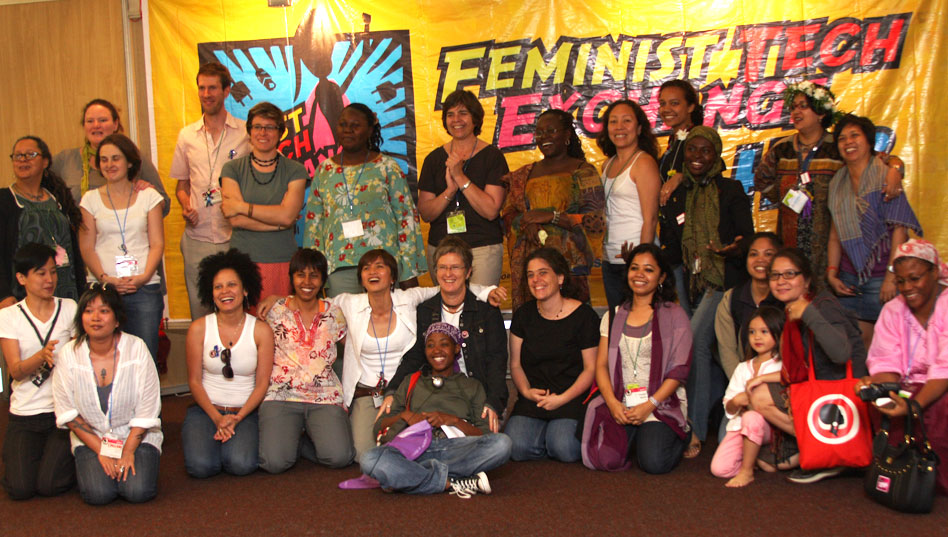
The FPIs is a **living collaboration between feminist activists** from all over the world! In 2014, 50 women’s rights, sexual rights and digital rights activists came together in Kuala Lampur to **imagine a feminist internet** together. The FPIs that emerged from that meeting have since then sparked the organising of similar local and regional conversations in cities such as Johannesburg, Mumbai, Buenos Aires, Kenya, Zimbabwe and Sarajevo. Some activists have also translated the FPIs into local languages such as Bosnian, Spanish, Arabic, Kiswahili and Tigrigna to name a few!
[Creating the Feminist Principles of the internet](https://www.genderit.org/gender-sexuality-and-internet-imagineafeministinternet "#imagineafeministinternet")
[Making a Feminist internet](https://www.genderit.org/making-feminist-internet-building-movements-remembering-resistance-hacking-security-and-care "Making a feminist internet")
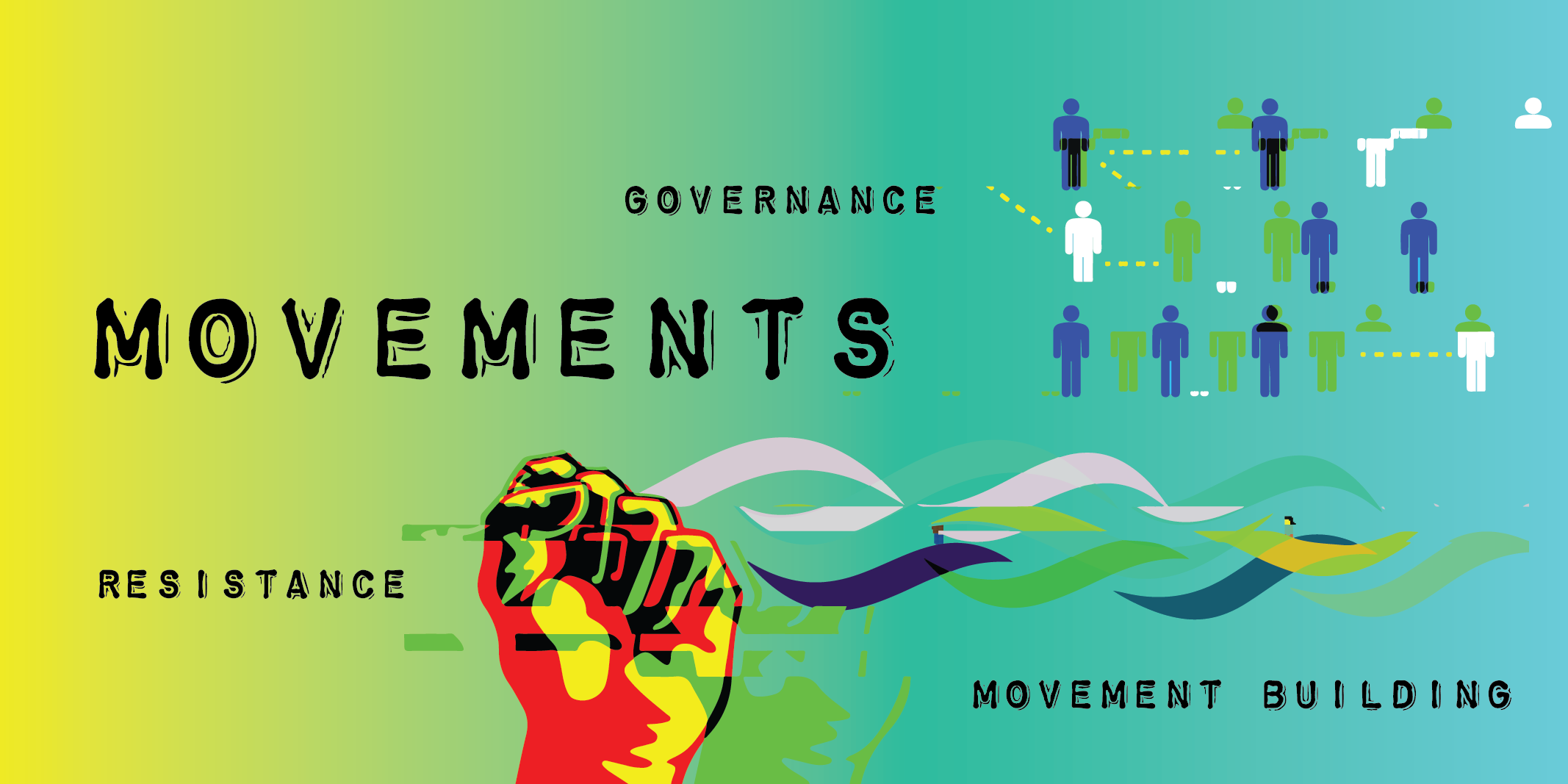
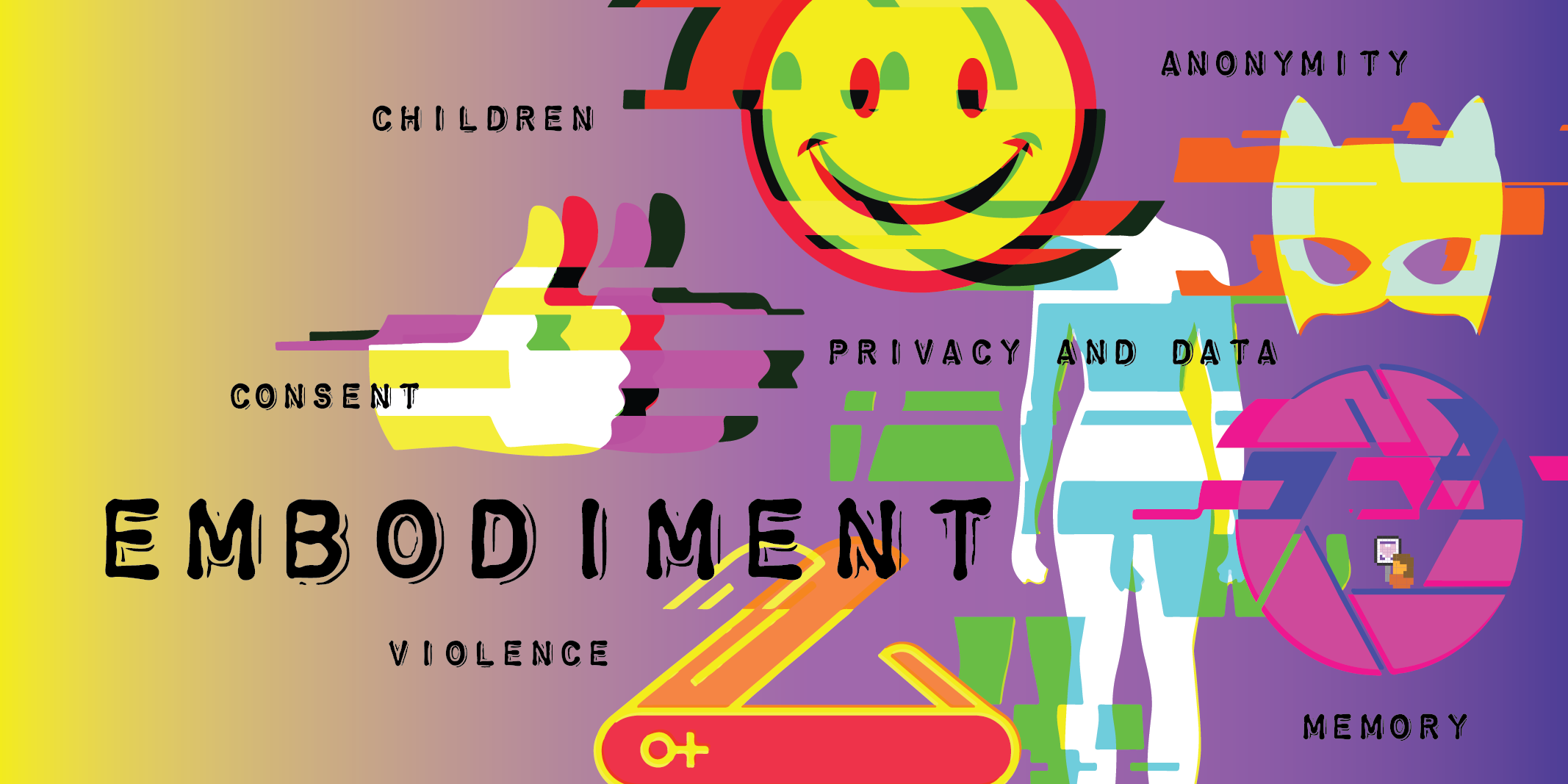
Currently, the FPIs take the form of 5 clusters of 17 principles, or statements, that offer a **gender and sexual rights lens on critical internet-related rights**. These clusters include principles on:
#### **What is a local conversation and why have one?**
These principles were never designed to remain tucked away on a webpage. They emerged out of a deep desire by feminist activists for **tools** to articulate what we mean when we talk about a feminist internet.
But the FPIs are not useful if they do not **resonate with the experiences and desires of diverse women and queer folk** when engaging with and shaping the internet in their local contexts. A local conversation about the FPIs helps activists in their spaces of activism to **contextualise the FPIs and apply a feminist lens to local experiences. **
Bringing activists together in your community to speak about the FPIs can enable you to:
- Deepen your analysis and understanding of the local experiences that women and queer folk have when using the internet
- Identify what is missing in the FPIs and how your local context can inform their continued strengthening
**Do you want to host a local conversation about the Feminist Principles of the Internet?
We hear you! You’ve come to the right place!**
#### **About this kit**
We offer this kit as **a guide on how to host a local conversation with activists in your community about the Feminist Principles of the Internet. **
It is intended for our broader APC community, feminist internet communities, women and gender-diverse activists, sexual rights activists curious about technology, internet rights activists interested in feminist practice, and magical humans like **you**.
The pages below are an **archive of practices**! They contain the many knowledges of digital security trainers, conversation facilitators and event organisers from around the world who have generously shared their practices for planning feminist events, holding healthy conversations, and getting our hands dirty with technology.
The kit provides guidance on:
- How to organise a local conversation about the FPIs, whether it be face-to-face or in the virtual rooms and verandas of the internet
- How to hold a feminist space and facilitate healthy conversation
- Fun and provoking activities and conversation methods
- How to support the production of thought pieces and creative communications to share insights from your local conversation
#### **How to use this kit**
The kit is a guide that has grown from our years of experience holding feminist spaces to engage with technology. It has been designed as a step-by-step process covering different aspects of hosting a local conversation and the things you may want to consider. However, it is not intended to be prescriptive in any way, but is rather an offering - a means of sharing what we have learnt. We encourage you to take what is useful, self-navigate through the kit, jump to the sections you need the most, and most importantly, play, mess around and experiment with this kit! Deconstruct, rebuild and adapt the points in this guide to your own needs, desires and realities.
In the final pages, you will find a list of relevant resources on particular aspects of hosting a local conversation for further reading. You will also find an appendix with downloadable templates and frameworks that can help shape conversation materials and activities.
Read through each section, or jump to the sections that interest you the most using the page links in the table of contents!
| ##### [](https://explorefpi.apc.org/books/explore-fpis-toolkit/chapter/chapter-1-how-to-organise-an-fpi-convening "Chapter 1. How to organise an FPI convening")[Chapter 1. How to organise an FPI convening](https://explorefpi.apc.org/books/explore-fpis-toolkit/chapter/chapter-1-how-to-organise-an-fpi-convening "Chapter 1. How to organise an FPI convening")
| ##### [Chapter 2. Holding space and getting to know each other](https://explorefpi.apc.org/books/explore-fpis-toolkit/chapter/chapter-2-holding-space-and-getting-to-know-each-other "Chapter 2. Holding space and getting to know each other")
|
| ##### [Chapter 3. Playing with tech](https://explorefpi.apc.org/books/explore-fpis-toolkit/chapter/chapter-3-playing-with-tech "Chapter 3. Playing with tech")
| ##### [Chapter 4. How to introduce the FPIs](https://explorefpi.apc.org/books/explore-fpis-toolkit/chapter/chapter-4-how-to-introduce-the-fpis "Chapter 4. How to introduce the FPIs")
|
**Ready? Let’s dive in!**# Chapter 1. How to organise an FPI convening
You have finally decided to host a local conversation on the Feminist Principles of the Internet! But how do you even begin to organise one? The logistical decisions you make play an important role in making sure you are able to hold a healthy conversational space and carry out the purpose of the convening effectively.
# Intro
*[Image source.](https://www.genderit.org/articles/breaking-online-gender-based-violence)*
You have finally decided to host a local conversation on the Feminist Principles of the Internet! But how do you even begin to organise one? The **logistical decisions you make play an important role** in making sure you are able to hold a healthy conversational space and carry out the purpose of the convening effectively.
In this section, we will talk about:
| **Before the convening** | **During the convening** | **After the convening** |
| [Who to bring together](https://explorefpi.apc.org/books/explore-fpis-toolkit/page/who-to-bring-together "Who to bring together")
[Where to host](https://explorefpi.apc.org/books/explore-fpis-toolkit/page/where-to-host "Where to host")
[Planning an agenda](https://explorefpi.apc.org/books/explore-fpis-toolkit/page/planning-an-agenda "Planning an agenda")
[Resources needed](https://explorefpi.apc.org/books/explore-fpis-toolkit/page/resources-needed "Resources needed") | [Documentation](https://explorefpi.apc.org/books/explore-fpis-toolkit/page/documentation "Documentation")
| [Evaluation](https://explorefpi.apc.org/books/explore-fpis-toolkit/page/evaluation "Evaluation")
|
Firstly, you can make effective logistical decisions when you have clear **objectives **for your conversation. Here are some questions to help you gain clarity on what you want to achieve:
- What motivated you to host a local conversation about the FPIs?
- What emotions arise for you when you think about the FPIs in relation to your local context? What type of action do these emotions inspire within you?
- Do you want the conversation to be participant-led, or do you want to decide on the topics and conversation methods beforehand?
- By the end of the convening, what would you like to have gained?
Secondly, we know that even the logistical details of a convening can either uphold or **dismantle power** hierarchies. When organised without an awareness of power differences, convenings can run the risk of excluding or silencing certain people when their needs are not met. As you decide who you want to bring together, it is important to ensure that those invited are accommodated in all the subsequent decision-making of where to host, planning an agenda, documentation and evaluation.
# Who to bring together
[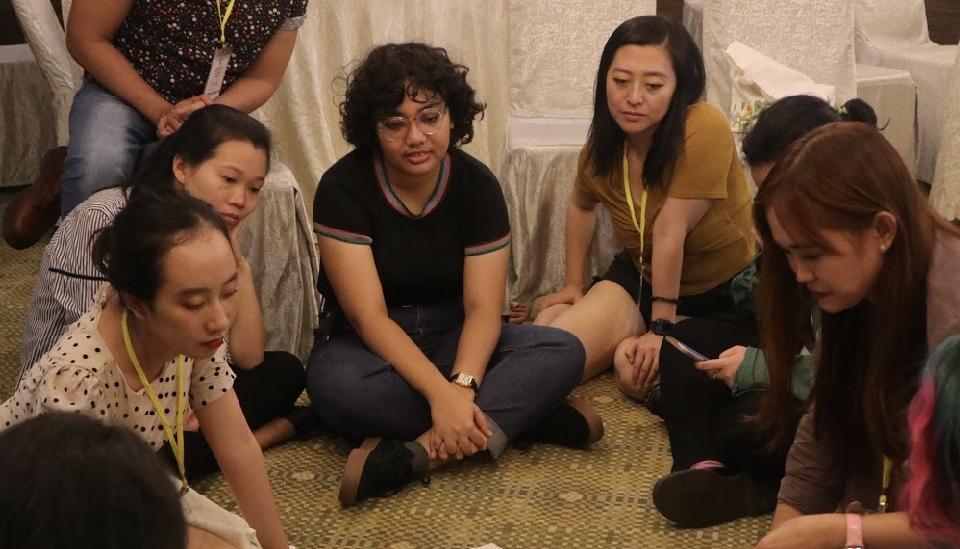](https://explorefpi.apc.org/uploads/images/gallery/2022-06/feministinternetsouthasiaconvening.jpeg)*Image description: Women and girls sitting on floor, at the Imagine a Feminist Internet South East Asia regional convening. Image source: Foundation for Media Alternatives, Philippines*
We want a space that is **magnificently feminist**, right? Creating a feminist space is about the **inclusion of diverse voices**. A diversity of perspectives is also key for conversations about technology, which we know intersects with all aspects of our lives and activism. Here are some ways diversity can be enhanced:
- **Invite activist voices across movements**: Having voices other than those from your own movement can enhance the richness of conversations by bringing different perspectives and ideas. Inviting folks from different movements and sectors also stokes **cross-movement building** that can strengthen learning, solidarity and advocacy.
- **Invite voices from different locations in their movement**: Our movements are made up of a constellation of actors that include individuals, collectives and organisations working at local, national, regional and international levels. Some hold more power in their spaces of activism than others. Some see broad patterns from working fluidly across different capacities, while others have deeply rooted insight of specific spaces from their longstanding work in a particular position. Inviting folks from different locations can nurture **holistic conversations around the intersecting experiences** of working around certain issues.
#### **Deciding who to invite**
Who you wish to bring together will also depend on your objectives for the conversation. Here are some questions to help you make decisions about who to invite:
- Whose presence do you want to prioritise in this moment? If your focus for the conversation is on the intersection of technology and sexuality, for example, you will want to have the majority of participants be folks working in the area of sexuality.
- If you have hosted a similar convening before, you may want to reflect on, who have you brought together in the past? Who did you feel was missing?
- How wide is the network you want to bring together? Do you want to have this conversation with activists in your street? In your neighbourhood or community? Or with activists from across your city?
| ##### *Things to be aware of when bringing people together:*
Remember! **People hold power.** Organising a healthy conversational space that holds true to your reason for bringing people together requires you to **be strategic about safety**.
- Would the activists you invite feel safe with funders in the room?
- Do you want to include men?
- Do you belong to a marginalised community, and want the conversation to be specifically among folks that share the same or similar marginalisations?
- Do you want to include charismatic or influential leaders from your movement?
- If you are organising the conversation with a team, make sure the number of team members is less than the number of those who have been invited.
|
#### **Different ways for inviting folks**
Now that you have an idea of who to bring together, there are a number of ways you can consider inviting folks. Here are some questions to guide your decision-making:
- Do you want to host a closed conversation, or make the invitation public?
- Are there specific people you want to invite, or do you want to extend the invitation to people beyond your network?
- How many people would you like to host, or have the capacity to host?
Depending on the answers to the questions above, you may decide to reach out to specific people, send out an open invitation to trusted networks, or create a call for applications.
If you decide to select participants based on applications, make sure you have a diverse selection team and communicate with applicants about the selection process to ensure transparency.
\[insert link to an appendix/resources section that includes an adapted spreadsheet from last MFI on criteria for selection\]
#### **Needs assessments**
Once you have confirmed your participants, sending them a needs assessment form before the start of the event can help folks feel **included, seen and comfortable**. The responses you receive will enable you to be aware of people’s needs and guide subsequent decision-making on logistics.
| ##### *Examples of what you really need to know about participants’ needs:*
- Do they need financial support to be able to attend?
- Do they have children or care responsibilities that require their attention at particular hours or on particular days?
- Do they have access to transport to the venue, or access to data in the event of the conversation taking place online?
- Do they have accessibility requirements due to a disability?
- Will there be language diversity at the event that requires the presence of translators?
- What are their dietary needs?
|
\[insert link to an appendix/resources section that includes an adapted needs assessment form template\]
# Where to host
**Space is political.** Where you decide to hold the conversation can either enhance the inclusion of those who have been invited or exclude them. In making decisions of where to host a local conversation, we need to interrogate our assumptions of people’s access to devices and connectivity, as well as our assumptions about the ablebodiedness of our participants.
Use the needs assessment discussed in the previous section to guide your decision-making in choosing a venue for your event.
Our environment also has a huge impact on our engagement. If you are hosting a physical conversation, look for a space that has **good ventilation, fresh air and lots of natural light**. If possible, find a place that makes you feel inspired! For you, this might look like a venue surrounded by nature, or a local arts and culture centre nestled within a bustling city, or a community-led space with a rich history of hosting activist organising.
#### **Ethical considerations**
Go through your participant list and their responses from the needs assessment to answer the following questions:
- **Do folks have specific accessibility needs?** If choosing a physical venue, make sure the venue enables the mobility and onsite accessibility of all those attending. If hosting an online conversation, choose a platform that has the necessary features available to ensure full and engaged participation of all invited.
- **Is the venue safe for diverse identities?** Is it queer-friendly? Is it women-friendly?
- **Can folks access the venue using public transport?**
- **Does the venue provide vegetarian meals, and accommodate other dietary needs?**
- **Who runs the space?** If choosing a physical venue, are its custodians attentive to the ecological impact of the space, and the environmental sustainability of its surrounds? Do they welcome diverse bodies? If hosting an online conversation, are your chosen platform’s developers invested in enabling internet freedom?
- **Can information be kept safe at the venue?** Can conversation materials be locked away overnight if taking place over multiple days? Does the space have surveillance cameras, and if so, can they be turned off for the duration of your event? If taking place online, does your chosen platform support your privacy needs?
Useful resource: [Come together, APC guidelines on planning and designing online events](https://cometogether.apc.org/ "Come together, APC guidelines on planning and designing online events")
#### **Venue facilities**
Depending on the conversation activities you want to host, also consider whether the venue has:
- A whiteboard or chalkboard
- Walls on which to stick up posters
- Open space for participants to self-organise
- If hosting a conversation online, you may want to choose a platform that enables breakout rooms, and explore online tools for different ways of engaging and being together
Lastly, let’s not forget about our love for technology and our ability to be in our bodies!
| **Bringing your technology to physical venues**
| **Bringing your bodies to online spaces**
|
| - Check if there are plug points for folks to charge their devices and stay **connected**
- Ask the venue beforehand about their Wi-Fi facilities
- Create a **digital repository** for folks to share information and resources with one another
Share infrastructure! Invite folks to bring their devices and favourite tech to the conversation.
| Does the platform you wish to use allow folks to engage their senses? You may want to:
- Share, **listen** to, and **dance** to music!
- **See** one another on video
- Enable ongoing **engagement** via a separate chat platform or by making use of the video conferencing platform’s chat facility
Pool resources! Invite folks to bring material items to the conversation that speak to particular moments in their activism.
|
| ##### *Reflective exercise*
What is the best workshop or conversation you have been in? In a list, describe the aspects of the space you believe contributed to the energy you experienced.
|
# Planning an agenda
Alright! Now that we know who to bring, and where to host our conversation, how are we going to organise the time spent together? Organising a local conversation is not easy and takes a lot of energy on behalf of the organising team. **You want to make the most out of the conversation space.** Having an agenda can help you stay focussed on your objectives in the limited timeframe you have.
It is important to note that the agenda will depend on two key things:
1. the amount of time you have together
2. your objectives and the objectives of those attending
You may decide to plan the agenda in advance, or decide on the agenda collaboratively with participants on the spot. Keeping the agenda open for collaboration can enhance the ownership that participants feel of the space. At the same time, bringing people together requires participants to give their time and resources, and many may feel a sense of security in being able to anticipate a planned structure to the event.
#### **The deliberateness of pace**
The pace of the conversation should be **deliberate**, as it impacts the nature of conversations as well as your choice of conversation methods. How long do you want the conversation to be? You want to think about:
| **Number of sessions**
| **Length of each session** | **If more than one session, frequency of sessions** |
| One session?
Multiple sessions?
| Half a day?
A full day?
Multiple days?
| Consecutive days?
Weekly?
Monthly?
|
Having participants get to know one another, allowing for in-depth conversations to develop, and creating space for energisers and breaks, all take time. Simultaneously, long sessions or a high frequency of sessions can be draining for folks, or cause the event to lose momentum. This can also be the case when running a virtual event, where the over-reliance on the brain and eyes to process inputs, struggles with technology, and fewer, shorter breaks all contribute to digital fatigue. Consider the minimum amount of time it would take to have an **energised, engaging and generative** conversational space and develop an agenda around those parameters.
Lastly, remember that these local conversations can be as informal or as formal, and as big or as small as you like. While you may want to cover a lot of ground in one go, design the agenda at a scale with which **you feel most comfortable**.
#### **Conversation flow**
Now, how do you want to integrate your objectives and the objectives of participants into the agenda? If you want the conversation to be entirely participant-led, you may want to consider an Open Space methodology for facilitating the conversation flow.
If you prefer to guide the topics of discussion, you will want to choose conversation methods for those topics beforehand that can enhance engagement.
As a basic framework, here are some **must-haves **to include in your agenda:
1. Icebreaker activities for getting to know one another
2. A conversation about participants’ expectations and setting intentions for the session
3. Collective decision-making on the principles for participation
4. Conversation activities
5. Breaks in-between activities
6. Closing check-out
\[Insert link to an appendix/resources section that includes a sample agenda\]
**Top tip! Bring skilled facilitators on board** that can support the structure and flow of the conversation and guide the development of your agenda. Meet with facilitators before the event to discuss and brainstorm!
#### **Use this kit!**
In the chapters to follow, you will find more information on how to facilitate and hold a conversation space. You will also find plenty of ideas for activities and methods specifically designed for enhancing conversations around the different FPIs and their relation to local contexts. Read these chapters and add the activities that resonate with your objectives to the agenda of your event!
**See these chapters:**
[Chapter 2. Holding space and getting to know each other](https://explorefpi.apc.org/books/explore-fpis-toolkit/chapter/chapter-2-holding-space-and-getting-to-know-each-other "Chapter 2. Holding space and getting to know each other")
[Chapter 3. Playing with tech](https://explorefpi.apc.org/books/explore-fpis-toolkit/chapter/chapter-3-playing-with-tech "Chapter 3. Playing with tech")
# Resources needed
We all know that hosting any event, whether online or in-person requires resources, which are **both people, as well as money**. At the same time, we know that such resources are not always available, both for yourself as the organiser, or for the participants of your event. **Having adequate funding for your event responds to the collective need for embodied care** among you, your team and your participants when investing time and labour in coming together. It is useful to be aware of any hidden costs in the form of time and money to everyone involved.
When applying for funding for your event, here are a few costs you may want to consider when drawing up your budget proposal:
**Infrastructure and venue costs:** For an in-person local conversation, you may have to consider costs such as venue rental, meals, materials needed for activities, transport for participants and perhaps even accommodation. At the same time, an online event may require costs for technology, or the paying for the use of secure platforms or online spaces.
**Travel costs of participants:** It is not always acknowledged that both online and in-person events require a ‘travel process’: participants need to commute to a space where they can devote their full attention. Participants will have varied hidden costs to be fully present at your event, which can include data costs, renting a private space with internet access, buying any materials needed for the event, paying for elder or child care, or buying meals.
**Top tip!**
**Include a flat per diem for each participant with no claims process** in your budget proposal. Participants can use the money to pay for the specific things they need in order to participate and be fully present at your event!
**A dedicated support team:** Whether you are organising your local conversation on your own, or as part of a collective, having a support team dedicated to different needs of your event can help you to stay focussed on your role hosting the event. Support persons you may want to consider bringing on board would include:
- **An experienced facilitator:** especially if you intend on having difficult conversations around sensitive topics, having an experienced facilitator to hold the space can greatly enhance the safety and depth of each conversation and the process overall.
- **A tech person or team:** particularly in the case of an online event, a dedicated tech person (or team, for a larger group) can offer guidance to participants who may be new to using particular platforms or online tools, or struggling with their connectivity.
- **A documenter or documentation team:** as you will read below, documenting the process and content of conversations during your event greatly enhances the inclusivity, accountability and possibilities for learning that your event can offer. Having a person or team dedicated to this task can ensure a coordinated, comprehensive and efficient documentation process and will provide rich material that you can draw from for any future action after your event.
# Documentation
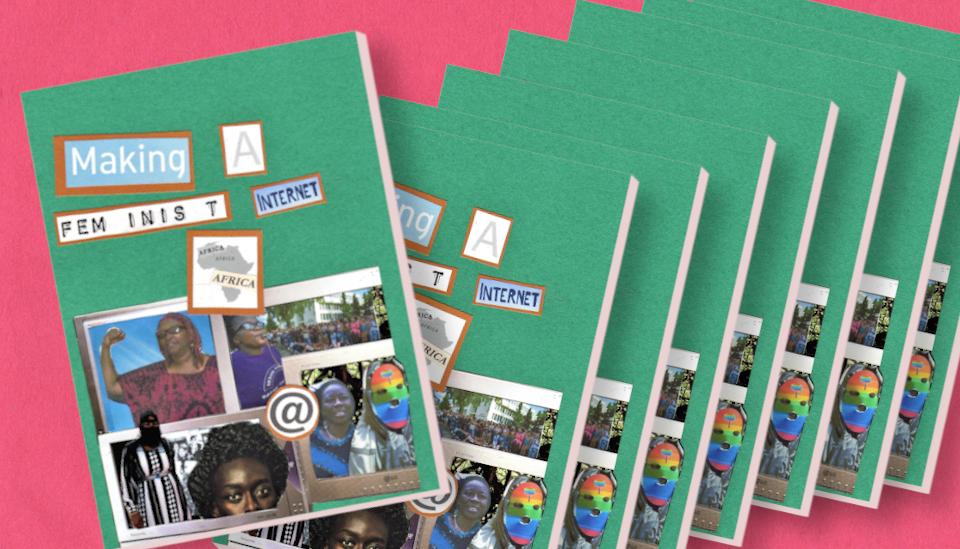*An [ezine](https://genderit.org/resources/mfi-africa-e-zine) was created by Wairimũ Murĩithi and Youlendree Appasamy in 2020, to document the MFIAfrica convening in Johannesburg in 2019.*
Documenting your conversation has three key roles:
1. It makes your event more inclusive, as you are able to share the notes and insights of your event with those who were unable to attend.
2. It enables learning for both you and your participants, as the notes become a reference for continued organising.
3. It enhances accountability in a conversation context in which key decisions are being made, or strategies are being discussed for future action around a particular issue.
Two key aspects of your conversation that are useful to document are:
1. The content of conversations
2. The process for holding the conversation space
Depending on the nature of the event, you may also want to note other aspects, such as the names and contact details of participants (with their permission), and logistical details.
#### **Ways of documenting**
Documentation can be done through a range of media, including text or transcribing, illustrations, photographs and sound recordings. All conversation materials, including posters and sticky notes, and online collaboration spaces for conducting activities in the case of a virtual event, are also rich resources that can contribute to the documentation of the conversation.
| **Medium of documentation:** | **Useful for:** | **What you need:** |
| Live text | Capturing spoken insights and important quotes
Sharing key points with participants post-event
Recording the structure of the conversation and process
Report writing
Writing publishable thought pieces about insights
| - For an in-person event, a dedicated table and chair for documenter/s to sit and write near plug point
- Laptop/s for typing
- Online notepad or offline notetaking software
|
| Illustrations | Capturing the energy of the room
Sharing insights in an accessible, visually intriguing way
Creating communication outputs about the event
| - For an in-person event, a dedicated table and chair for illustrator/s to sit and draw near plug point if using software
- Illustration materials as needed by illustrator
|
| Sound recordings | Transcribing spoken conversation word-for-word
Report writing
Capturing spoken insights if a dedicated text documenter is unavailable
| For an in-person event:
- Voice recorder
- Extra set of batteries
- USB for uploading recordings when the recorder reaches full storage capacity
For a virtual event:
- Recording facility available on your chosen video-conferencing platform
|
| Photography and videography | Capturing insights shared on conversation materials, such as post-it notes and posters, or slides of presentations
Capturing the energy of the room
Sharing clips or visuals in communication content about the event
| - Camera
- Camera charging cables
- USB for uploading photographs and video when the camera reaches full storage capacity
- For a virtual event, a recording facility available on your chosen video-conferencing platform
|
#### **Storage and transfer of files**
How you store your documentation materials will impact the safety of that data. Based on your context, you may prefer to store documentation materials online on a secure cloud platform, or offline on a hard drive, or both. You may also want to decide beforehand on the use of a specific secure infrastructure, such as a password-protected online notepad, on which notes can be created and kept, especially if you are in a country with high levels of online surveillance.
The safety of data can also be compromised during the transfer of files. Try to avoid emailing files if you feel that the material you are sharing must remain confidential. If needed, consider encrypting any file in transit, or create a secure, password-protected shared folder online in which documenters can download files or access them.
#### **Safety of participants**
It is important to recognise that the documentation of your event can compromise the safety of participants if not adapted to their security needs. Some precautions you can take include:
- Inform participants before the event of your intention to document the conversation, for what reason, and how.
- Prepare a short questionnaire that folks can fill out on arrival to your event that asks them whether they give permission to be filmed, photographed or otherwise recorded, or attributed in text. Some participants will not want their presence to be documented in any way, while others will only want to give permission under certain conditions.
\[Insert link to appendix/resources section that includes questionnaire template on permissions/consent\]
- Establish a set of protocols collectively at the start of the conversation that informs how you document, and under which conditions you don’t. Decide together how to indicate to the collective if a certain contribution is off the record, or if a participant wishes for a particular comment they make to remain anonymous.
- Discuss with participants at the start of the event whether those attending can publish insights on their social media, and if so, under what conditions.
**Remember!**
Back up your documentation on an encrypted hard drive or secure online cloud at the end of each session or conversation day to mitigate the risk of losing the files!
For more details on documenting virtual events specifically, visit this page [Documentation design and preserving memories](https://cometogether.apc.org/books/3-rising-action/page/documentation-design-and-preserving-memories), from the APC guidelines on planning and designing online events)
# Evaluation
Evaluation is useful for two key reasons:
1. Improving your processes
2. Sharing learnings with others hosting similar events
Evaluations are helpful both during and after your event. Evaluations at the end of each session are particularly helpful if you intend on hosting more than one session, or a follow-up conversation in the future. One way of doing an evaluation with folks on-site is by using the **Plus Delta practice**.
| ##### *Plus Delta practice*
At the end of a session, distribute two sticky notes to each participant. One sticky note will be marked with a plus (+) sign, and the other with a delta (∆) sign. Ask them to answer the following question on each corresponding sticky note:
- \+ What did you like?
- ∆ What can be improved?
|
At the end of the conversation, you can also send an evaluation form to those who have attended. **Reflect on what you want to learn from participants** about their experience of the event, and design the questions accordingly. Include the responses received from the evaluations in your final report.
#### **Safety**
- When documenting responses, remember to ask the permission of participants as to whether they want to be attributed or not in the final report.
- When sending out the evaluation form, be transparent about your intentions in acquiring responses. Do you intend on publishing their responses in any way? Will their responses be shared with any third party?
- If possible, send the evaluation form using a link via a survey platform so that their responses cannot be traced back to them, and give participants the option to respond anonymously.
\[Insert in-document link to the resources section, or quick links to one or two resources relevant to this chapter\] https://padlet.com/jhybe/d74tt00dl5qogaex
Useful resource: [Come together, APC guidelines on planning and designing online](https://cometogether.apc.org/)[ events](https://cometogether.apc.org/)
# Chapter 2. Holding space and getting to know each other
Remember how we touched on some event ‘must-haves’ for planning an agenda in the previous chapter? These features form part of a framework for holding a feminist conversation space! When we start to integrate an awareness of power, practices of care and an attention to safety into our agenda, we set the scene for a conversation space that is fun, in-depth, creative and engaging for all folks participating!
# Intro
[Image source.](https://www.genderit.org/feminist-talk/impact-what-and-whom-digital-technologies-and-feminist-movement-building)
Remember how we touched on some event ‘must-haves’ for planning an agenda in the previous chapter? These features form part of a **framework for holding a feminist conversation space**! When we start to integrate an awareness of power, practices of care and an attention to safety into our agenda, we set the scene for a conversation space that is **fun, in-depth, creative and engaging for all folks participating**!
This chapter is for you if:
- There are sensitive topics you would like to discuss, but are unsure of how to do so safely
- You are worried conversations will lack depth, because participants might feel uncomfortable sharing with other participants they do not know
- You want to learn more about navigating power and privilege in conversations
- You are interested in process, and want examples of different conversation methods
- You’re looking for practical activities for practising collective care during your event
Curious to get started? In this chapter we will look at:
| **Feminist principles for holding space** | **The principles in practice!** |
| 1. [Awareness of power](https://explorefpi.apc.org/books/explore-fpis-toolkit/page/principle-1-awareness-of-power "Principle 1: Awareness of power")
2. [Integrating care](https://explorefpi.apc.org/books/explore-fpis-toolkit/page/principle-2-integrating-care-into-conversation-spaces "Principle 2: Integrating care into conversation spaces")
3. [Attention to safety](https://explorefpi.apc.org/books/explore-fpis-toolkit/page/principle-3-attention-to-safety "Principle 3: Attention to safety")
4. [Principles for participation](https://explorefpi.apc.org/books/explore-fpis-toolkit/page/principle-4-principles-for-participation "Principle 4: Principles for participation")
5. [Get to know each other!](https://explorefpi.apc.org/books/explore-fpis-toolkit/page/principle-5-get-to-know-each-other "Principle 5: Get to know each other!")
| 1. [Stories as pathways](https://explorefpi.apc.org/books/explore-fpis-toolkit/page/principles-in-action-stories-as-pathways "Principles in action! Stories as pathways")
2. [Open space conversation method](https://explorefpi.apc.org/books/explore-fpis-toolkit/page/open-space-method "Open Space Method")
3. [Ecosystem dialogue](https://explorefpi.apc.org/books/explore-fpis-toolkit/page/ecosystem-dialogue "Ecosystem Dialogue")
|
# Principle 1: Awareness of power
You want to have conversations that **flesh out the complexity of different topics, nurtures multi-faceted perspectives and is intricately connected to the pleasure we experience when being online**! For this to happen, it is essential, first and foremost, to be aware of how power dynamics across intersections of our identities can play out in conversational spaces.
In any space with folks of diverse identities, backgrounds and experiences, different people will hold varying degrees of power in relation to others in the room. This power is often in the form of privileges, either as the result of their identity, or their positionality in relation to how the space enables or disenables their sense of safety.
#### **Identity privilege**
**An awareness of power starts with us!** Your positionality as the event organiser already provides you with a certain amount of authority to control how the conversation is shaped. Over and above this, you may have certain identity privileges (for example: being white, straight, cisgender or able-bodied) that can make it harder for you to enable the meaningful participation of those in the room who experience oppression.
| ##### *Creating a healthy conversational space!*
In order to create a conversation space where the lived experiences of all participants are valued, it is important to be mindful of the **intersectionality** of the identities of folks present, and to practice **inclusivity**. You can do this by:
- Self-reflecting on your privileges
- Decentering your perspective
- Listening to the experiences of those that identify differently to you
- Being mindful of the language you use and the power of language to include or ostracise folks
- Being willing to apologise for your mistakes and adjust your behaviour if needed
- Recognising that everyone brings knowledge to the table
|
Power can show up in conversation spaces in various ways. **Recognise them** so that you can counter inappropriate behaviour or power imbalances that emerge in the room! Some examples include:
- **Freedom from certain oppressions:** some participants may run the risk of silencing or deprioritising the perspectives of marginalised folks because they do not share the same experiences
- **Abilities:** freedom from disabilities or neurodivergent needs gives certain participants more access to the space, and can lead to the exclusion of perspectives from folks who express themselves differently or require specialised access to conversation spaces if their needs are not met
- **Freedom from care-giving roles:** not having care responsibilities for children, elders, family members, roommates or friends can enable participants to engage more fully than others who cannot be present for the entirety of the conversation
- **Facility with spoken language:** when conversations are held in a participants’ native or first language, it is easier for them than others to engage, follow and control conversation flow
- **Knowledge privilege:** familiarity with the conversation topic can lead participants to overshadow the perspectives of others or direct the conversation flow
- **Relational privilege:** knowing other participants in the room enables comfortability, which can lead to participants taking up more space than others who do not know anyone
#### **Privilege in virtual settings**
While an awareness of identity privilege is integral for holding a healthy conversational space, **these privileges can be compounded in an online event by technological privileges** that may not be shared by everyone in the virtual room. Technological privileges affect participants’ abilities to engage fully in the conversation. These can look like:
- Technological capacity: having more access to the software and hardware needed to participate in the event
- Digital literacy: participants will have varying levels of difficulty navigating a computer interface or using the features of a meeting platform
- Better internet bandwidth: internet bandwidth determines connectivity quality, which affects participants’ ability to hear voices clearly, see video clearly, and use real-time interactive online tools
- Designated workspace: some participants will join your conversation from a quiet, private, well-lit space, while others may join from public or shared spaces where privacy and freedom from distraction is not guaranteed
# Principle 2: Integrating care into conversation spaces
Attention to care is an integral part of practicing the Feminist Principles of the Internet, since it **underpins our imagining of what a world where everyone experiences digital safety, health, and freedom of expression could look and feel like**! But what do we mean by care, and why should it be integrated into our conversation spaces?
The activists coming into your space do not leave their activism, emotions or daily lived experiences at the door when they enter. Instead, they bring with them worlds of past traumas and stories about their relationships with their movements. As a feminist space, your event must **give room for moments of rest and healing**, knowing that your participants may be struggling with burn out and other mental, emotional and physical challenges.
Secondly, integrating care into your local conversation is **a means of sustaining the wellbeing of your networks and movements**. It can strengthen solidarity and sustain the energy of those who are in need of support. Caring for ourselves and one another in the spaces we hold is an act of resistance in and of itself against the systems that rely on our dis-ease and lack of wellbeing to thrive. Collective care is a political act!
#### **Ways of integrating care into conversation spaces**
Care practices can be integrated into your event in a number of ways! Here are a few:
- Regular breaks: all the parts of us need rest! Ensure to include various moments throughout your event for participants to take a break from discussions, have a snack, make tea or coffee, go to the bathroom, have a cigarette or get some fresh air.
- Hydration and snacks: make sure your participants have access to plenty of water to stay hydrated during the conversation, as well as some snacks to stay energised. If your event is a full day, try to ensure that participants get at least one good meal in the time they are attending too.
- Icebreakers and energiser activities: these are essential for enhancing the comfortability of participants, creating explicit space for fun, and getting participants to engage their bodies. Hold an energiser activity at the start of the event and at the start of each new session, especially after breaks, to sustain and replenish energy levels in the room.
[Here are some icebreakers and energiser activities!](https://explorefpi.apc.org/books/explore-fpis-toolkit/page/appendix-icebreakers "Appendix : Icebreakers")
#### **Conversations or sessions about care**
If your event is over a full day or longer, and you would like to prioritise collective care as a key topic or feature in your agenda, **care activities can be entire sessions on their own**! You can consider:
- Engaging in self-care activities together
- Holding a conversation about care
Some self-care activities that you can do either individually, in groups, or collectively with all participants can include:
- **Stretch: **lead a stretching routine with participants.
- **Sitting meditation:** with a partner, or on their own, participants can find a spot to meditate, using the breath as an anchor by inhaling to gather your attention and exhaling to drop into your body.
- **Mindful walks:** if the location of the event allows, participants can go for a mindful walk in nature. Encourage participants to engage all their senses as they look, hear, smell and feel the natural scenery.
- **Journal:** give your participants a few minutes to do some personal journaling or a free writing exercise.
- **Share collective strategies of organisational care:** brainstorm together different ways in which care can be incorporated into organisational policy and practice.
- **Music:** Listening to music together can set the tone of a space and bring people into the same vibration or energy level. Have a playlist on-hand for different moments during the event.
- **Dance!** Dancing together helps us feel energised! This is a great practice to introduce after participants have been sitting for a long time, or when coming back after a lunch break to re-engage the body.
You may want to have a conversation about **care in your movement**, and brainstorm ideas about how to practice care both individually and collectively. Use the following questions to spark conversation and **learn from the experiences, politics and practices of others in the room:**
- What do you understand as self-care?
- What resistances do you have, if any, to self-care?
- How do you understand self-care as linked to collective care?
- Do you have any practices or rituals you consider to be self-care? What are they?
- How can we, as activists, remind ourselves to act in a self-caring way without feeling guilt, shame or privileged?
# Principle 3: Attention to safety
So, we’ve learnt that
✔ an awareness of power and privileges in the room **helps you to create conditions for marginalised voices to be amplified **and **recognise and respond** to inappropriate behaviour!
✔ integrating care practices into your conversation **provides important space for healing** and helps **sustain our movements**!
But how do we have conversations about sensitive topics that run the risk of triggering anxiety or reminding participants of harmful past experiences?
**A topic is sensitive when:**
- It relates to a participant’s past experiences or the experiences of people close to them
- It requires a participant to take a political stance
- It speaks to participants’ personal values
- It relates to a current, evolving political or social moment in our context
- It confronts the collective hurt experienced by certain communities, be they on religious, racial, ethnic, gendered, ability-related, age-related, sexual orientation, or other identity-related grounds.
#### **Things to consider**
Here are three points to take into consideration when talking about a sensitive issue:
1. We’ve learnt that **all participants do not hold the same level of privilege, self awareness or positionality**. Different topics may evoke different responses from different individuals, depending on their personal experiences. While some topics may simply be intellectual explorations for some, those same topics can be emotionally triggering for others.
2. **Trigger warnings are important.** They allow those who are sensitive to subjects of discrimination and violence to prepare themselves for discussing them, and better manage their reactions.
3. **Do not pressurise someone to talk about their experiences.** Forcing a participant to talk about a sensitive event is making them re-live that experience and all the negative emotions that come with it. Understand that some participants are not ready, or simply may not be willing, to speak openly about their past experiences.
#### **Prepare in advance!**
If you anticipate your conversation will cover sensitive topics, you can put precautions in place to support you in ensuring the safety and wellbeing of participants during your event. Here are some ways to prepare:
- **Have a mental health professional present** who can attend to participants that have been triggered
- Have a conversation with participants at the start of the event about some of the things that make them feel **safe, comfortable and welcome** in a space with a diversity of participants. Write them down and place them where they are easily visible to all participants during the conversation.
- **Inform** your participants at the start of the conversation of some of the topics that will be covered and **explain the importance of trigger warnings** from the beginning.
| ##### *Steps to take when someone feels triggered*
Even with the best of preparations, sometimes precautions are not effective, since triggers are very specific to each individual. Here are some steps you can take to support someone feeling triggered:
- **Recognise** that your content could be hurtful to someone.
- **Apologise** for saying something that hurt the person. Remember, the apology is about the person who has been hurt, and not about you. **Avoid justifying or defending your words or actions and be sincere about your apology.** It is not personal.
- **Empathise** by trying to understand why the participant may be hurt. You can do this by actively listening to the person who is feeling triggered.
- **Rectify** by avoiding a repetition of the specific trigger when continuing the discussion.
- **Be open** to participants leaving the conversation if they feel uncomfortable, or if they need some space.
|
# Principle 4: Principles for participation
[*Image source.*](https://genderit.org/feminist-talk/sexual-rights-internet-rights-and-feminism)
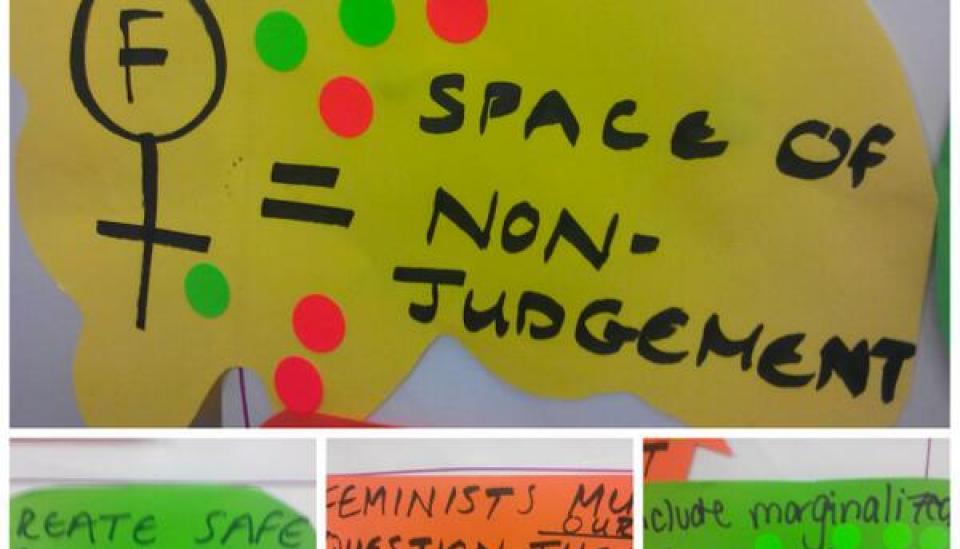
Principles for participation are a set of agreements made **at the start of your conversation** with participants. They are critical to ensuring the **safety, fun and inclusivity** of the space!
These agreements are best created collaboratively among participants. Active participation from folks in the development of the principles ensures
- a sense of co-ownership of the principles
- the principles embody perspectives from a diversity of realities
- the unique needs of each participant to fully engage in the conversation space are accounted for
While the principles you develop with participants will be unique to their needs and your specific context, you can read the principles of participation developed by members of the APC community as an example of what you may want to include.
Here you can read the [APC feminist principles of participation.](https://en.ftx.apc.org/books/home/page/our-feminist-principles-of-participation)
# Principle 5: Get to know each other!
Nurturing a sense of comfortability in the room, particularly if participants do not know one another, is essential for **trust building** and engendering a sense of **safety** among participants. Plus, where will you find a more fabulous group of folks than at your feminist conversation about the internet? **Learning about one another is part of the fun!**
At the start of the conversation, run a few activities that spark personal reflection about participants’ relationship to the internet. When folks share their stories with one another, **participants discover commonalities** between their experiences and the experiences of others in the room, which **catalyses connection and builds a sense of trust**.
Want to get your hands on some fun activities? **You’re in the right place!** Keep reading!
# Principles in action! Stories as pathways
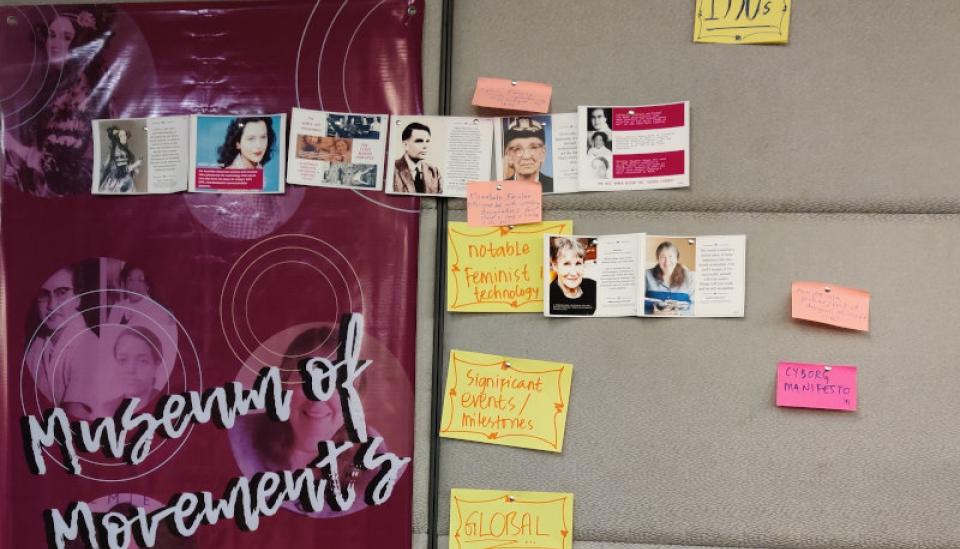*Museum of movements, by Shivani Lal (cropped). [Creative Commons BY-SA(link is external)](https://creativecommons.org/licenses/by-sa/4.0/).*
The act of sharing stories and recalling past moments of pleasure, power or significance in our activism and personal lives **render our role in shaping the internet and the world visible**, to one another, and to ourselves. Below are five activities that can help you and the participants of your conversation get to know one another!
#### First times!
Ask participants, **Think back to the first time you found pleasure online! **When was it? What device were you using? On what platform did you find pleasure, and with what activity? Describe the scenario, the feeling, the sense of discovery!
- Participants will come up with as many experiences as there are participants themselves, with some experiences dating back to childhood memories of online gaming to other experiences featuring secret searches for online porn.
- Encourage as many responses to emerge in the wider group as possible.
- As similarities start to emerge between responses, ask participants to find others in the room who had similar first time encounters to them.
- As groups come together, give the small groups five minutes to talk about their experiences amongst each other.
| **Resources you may need for this activity**
- Open space to mingle and for small group conversations
- **Time:** Approximately 15-20 mins, however, bear in mind that time is related to the number of participants! Use your intuition and be careful not to rush through this phase of your conversation.
|
#### Internet loves!
Ask participants, **What is one thing that you absolutely love about the internet?** This question prompts participants to remember how beneficial the internet is and has been – personally, professionally, in movement building and for networking. This is an especially good question to ask when participants are coming into the conversation with a lot of negative sentiments about the internet.
- Invite participants to stand in a circle and share one thing they love about the internet. It could relate to them personally, their activism, or something more general.
- Each participant gets a turn to speak as responses are shared around the circle, with a rule that nobody can repeat what another person has said previously.
- Encourage short interventions! One way to ensure no participant takes too much time is for a box of matches to be sent around the circle, and for each participant to light a match and finish their response before it burns down.
| **Resources you may need for this activity**
- A box of matches (or more, depending on the number of participants)
- A small container to hold the hot, burnt out matches
- **Time:** approximately 40 seconds per participant
|
#### First transgressions!
Ask participants to **think back to the first time they searched for something ‘taboo’ online**! What was it?
- Get participants to stand together in the room.
- Diverse responses will emerge on anything from transition surgery to periods, from understanding feminism to confronting religion.
- Invite participants to give ‘popcorn’ responses, which will encourage quick and light-hearted responses.
- As similarities emerge in the room, ask participants to find those with whom they share experiences
- Give each smaller group five minutes to talk among one another about their first transgressions.
| **Resources you may need for this activity**
- Open space to mingle and for small group conversations
- **Time**: approximately 10-15 mins
|
**Share insight!**
At the end of this activity, **remind participants of their power** not only to access information and find pleasure, but to shape and create what we can access in a space such as the internet that often feels like it was not created for us. The kinds of topics that are considered ‘taboo’ in our societies are so often the very type of content we need more of! At the same time, it is also the type of content that becomes political as states and private companies attempt to censor, erase and otherwise block access to it.
#### Sex and the internet!
Ask participants, **When was the first time you made the connection between sex and the internet?** Was it a conversation with a friend? An online search? Downloading a dating app? Sexting with a distanced lover?
- Invite voluntary responses from participants that describe their first time exploring sex or intimacy online.
- Keep the activity flowing and light-hearted by asking participants to give quick interventions
| **Time:** approximately 10-15 mins |
**Share insight!**
The internet [informs the way we understand and define sex, pleasure, intimacy and love](https://www.genderit.org/feminist-talk/how-we-reimagine-and-redefine-freedoms). It informs how we relate to one another and reimagine our freedoms. There is something very impactful about **connecting to our transgressive power** to transform, shape and use the internet for our activism and our pleasure!
Online communities exploring different ways of knowing or sharing stories relating to love, sex, pleasure and intimacy, open up worlds of reimagining, redefining and sensemaking of ourselves and our relationships.
#### Museum of movements!
When we reflect collectively on some of the memories we have of significant moments in our activism, **we surface the bookmarks that tie common references together!**
- Invite participants to bring to the local conversation an artefact from their activism. This is a material item that can include anything from a flyer, a sticker, a T-shirt, photographs or protest banners!
- Once you are ready to start the activity, bring participants together in the room, either seated or standing in a circle so that each person can see the other clearly.
- Go around the room and invite participants to share the story connected to their artefact. Ask participants, How did you become involved in that particular moment? Why did that moment matter to you? Who were the people around you in that moment that you loved, were inspired by, or with whom you were building relationships of care and solidarity? How did your presence and action in that moment rupture the normality of discrimination?
- Keep watch of the time, and limit different inputs from participants according to the time constraint you have for this activity and the number of people participating.
- If participants are many, split participants up into smaller groups for more intimate engagement and conversation.
| **Resources you may need for this activity**
- Open space for all participants to sit or stand in a circle, or possibly for smaller group conversations
- **Time**: approximately 30-40 mins
|
**Note**: This activity will require pre-planning, since it is helpful to ask participants well in advance to dig into their material history and bring an artefact from their activism to the conversation.
# Open Space Method
While you may already have a set agenda for your conversation, you may also want the topics of conversation to be entirely participant-led. In this case, the Open Space method is a powerful tool to help you **facilitate a participant-led conversation**!
Open Space is a method that allows participants in the room to decide on the topics they want to discuss, and can be used for a single session of conversation, multiple sessions or multiple days of conversations. It may take up the entire event, or be an engaging session that is followed by a plenary discussion.
#### **How it works**
Open Space has Four Rules, One Law and Two Insects.
The **Four Rules**
1. Whoever come are the right people
2. Whatever happens is the only thing that could have
3. Whenever it starts is the right time
4. When it’s over, it’s over
The One Law is the **Law of Two Feet**. It states:
> If, during the course of the conversation, any person finds themselves in a situation where they are neither learning nor contributing, they can go to a more productive place.
The Two Insects are **the Butterfly and the Bee**:
- Butterflies are the participants who hang out, maybe drink tea, and don’t appear to do too much. However, they may just be involved with the most important discussions of the day. Interesting conversations can emerge around them as people find them and pause to chat.
- Bees flit from conversation to conversation, cross-pollinating, bringing new ideas and fresh eyes to each conversation. They can also encourage mingling for those for whom the Law of Two Feet feels a bit rude.
| **Resources you will need for this activity**
- Lots of marker pens
- A4 paper on which to write down questions
- Poster paper on which to record discussions
- Prestik to stick poster paper to the wall
**Considerations about venue**
- The venue needs to be large enough to enable participants to sit in a large circle, and also to be large enough to hold several conversations simultaneously.
- Ideally, the venue needs to have walls on which you can stick your poster paper
|
#### **The process step-by-step**
**1. The question**
- Key to a successful Open Space event is to start the event with a good question. The question you ask and how you frame it will influence the types of conversations that are had. Be mindful that how you frame the question will also influence who turns up for the event. It can be tempting to just want people who agree with you to be there, but this will limit the diversity of your group.
- If you intend on making your entire event Open Space, the question is usually the title of the event. This helps set the tone for what will be discussed at the session. If this is the case, it is important that the question is stated clearly on the invitations.
**2. Setting up the conversation**
- Invite participants to sit in a circle. If the venue has chairs, the format of the space can be set up beforehand by arranging the chairs in a circle.
- Place a pile of sheets of A4 paper and marker pens in the centre of the circle, have a large timetable showing times of conversations and breaks, with blank, open slots, either in the centre of the circle on the floor, or on a nearby wall.
- Explain to participants the concept of Open Space, including the Four Rules, the Law of Two Feet, and the two insects. Also ask participants to record discussions on the poster paper that will be provided.
- If you like, you can also share tips on how to facilitate conversations, since these will be self-led by participants themselves.
**Remember!** Before starting Open Space, go through the ‘must-haves’ of the agenda, which include introductions, a welcome, icebreakers, and principles for participation! When setting up the conversation, take time to reiterate the principles of participation, explaining how they apply to the smaller group conversations too.
**3. Question proposals**
- Give participants the opportunity to propose questions related to the overall question or topic of the event. These will become focus points for different conversations.
- If a participant proposes a question, they must host that conversation, and document the conversation themselves or arrange someone else to document.
- Give roughly ten minutes for participants to come forward and propose a question by writing the question on one of the A4 pieces of paper in the centre of the circle.
- Participants who propose a question must also add their conversation to a blank slot in the timetable provided.
- The number of parallel conversations being held will depend on the number of people you anticipate attending, as well as the length of the session. If more questions are proposed than slots available, topics that are similar can be put together in the same conversation.
**4. Facilitating the session**
- Once questions have been proposed and transferred onto the timetable, give all participants a few minutes to look at the timetable and decide which conversations they want to join and when.
- Ask participants to go to the break-out space where their chosen question is being hosted for the first round of conversations to begin.
- Once the first round of conversations start, a key facilitation role will include keeping track of time. It is useful to have a bell or alternative sound that signals the end of one conversation session and the beginning of another.
- Throughout the event, ensure each break-out space has enough poster paper and pens available for documenting the conversations
- Remind participants every now and then about the Law of Two Feet.
- At the end of each conversation session, go to each break-out space and collect the notes that have been made. Put them up on an available wall.
- Depending on the number of participants and number of conversations, ensure to schedule an appropriate amount of time at the end of the event to allow one person to give feedback from each conversation that took place.
- The notes that were generated can be typed up and circulated to all participants who attended.
**5. Closing the event**
- The way you close the event will depend on your goals.
- You may have wanted simply to hold space for learning and sharing of experiences and ideas, in which case you could close the event by thanking everyone for their engagement and for honouring the principles of the space.
- You might have intended to use the conversation as a means of activating a community for local action, in which case you might want to invite participants to reach out if they are interested in being part of continuing and developing the initiative.
- Provide space at the end of the event for feedback from participants about how they experienced the process: what they found effective, what surprised them, and what they felt could be improved.
- End the event with a brief check out, giving each participant the chance to give a word or single sentence about how they are feeling after the conversations had.
# Ecosystem Dialogue
The ecosystem dialogue is a method for surfacing tensions, contradictions and issues among a group of participants. It is valuable as a form of conversation, because it allows participants in the ‘ecosystem’ to **plug into and connect to a diversity of views, experiences and perspectives**, and develop empathy and appreciation in the process.
#### **How it works**
There are a number of logistical points to take into consideration:
- **Number of participants:** A dialogue should ideally have between twenty and fifty participants.
- **Facilitation:** The method requires facilitation to guide the process. If possible, it is useful to have up to two facilitators to help move the process along.
- **Time allocation:** It is ideal to have at least three hours allocated to this method, as this amount of time allows for different experiences, feelings and perspectives to surface, and also allows time for the group collectively to think together about how to shift those experiences, feelings and perspectives.
| **Resources you will need for this activity**
- Coloured paper
- A marker pen
|
#### **The process step-by-step**
**1. Setting up the conversation**
- Invite participants to sit in a circle. If the venue has chairs, the format of the space can be set up beforehand by arranging the chairs in a circle.
- Invite participants to propose areas or issues of discussion that have importance for them, and collectively agree on one of those issues for the sake of the exercise.
- Ask participants how this issue manifests – what are the tensions, pain points or realities that get in the way of the issue being resolved? Give at least ten minutes for participants to surface this.
- As tensions surface, different types of actors in the ‘ecosystem’ will be named. Allow for at least eight voices or actors to emerge from the discussion.
- Write these voices on separate pieces of coloured paper, and place these pieces of paper on the floor around the room.
- Invite participants to choose which voice they would like to speak from in the dialogue. The voice they speak from does not have to be their own identity or embodied experience.
- Invite participants to get up and stand at the piece of coloured paper that represents their chosen voice.
**Remember!** If the ecosystem dialogue is your first session of the event, remember to first run through the ‘must-haves’ of an agenda, which include, introductions, welcome, icebreakers, principles for participation, and any other framing you would like to offer to participants for collectively holding space before you start.
**2. Dialogue part 1: Surfacing key tensions**
- To initiate the dialogue, invite one of the voices to start by giving their perspective on the issue.
- Encourage the flow of dialogue by inviting other voices to respond.
- It is important to allow the dialogue to flow. If participants get stuck, the facilitator can step in and act as provocateur in the discussion.
- Let participants know that they can move from one voice to the other, especially if they feel a particular voice is not fully present in the space.
- If new voices emerge, allow those to also enter the dialogue.
- Note that at this point, the dialogue may focus predominantly on the problems, the tensions and points of difference. Allow that to surface for at least 15-20 minutes.
**3. Dialogue part 2: Shifting from problem to deepen dialogue**
- Pause the dialogue for a moment. Suggest to participants that, now, their role is to think about how to build on what another actor or voice is saying. For example, if one voice surfaces a problem from their perspective, another voice can ask questions about that problem, or ask what that actor feels they need.
- Remind participants of the principle of ‘yes, and…’ This ensures all issues that surface are acknowledged as opposed to invalidated or broken down, and at the same time, actors are encouraged to think about how to shift those issues.
- Again, allow at least 15-20 minutes for this stage, depending on the number of participants in the dialogue.
**4. Dialogue part 3: Appreciation**
- Again, pause the conversation. Acknowledge what has been accomplished so far: surfacing issues and working to shift from problematising to thinking together in dialogue.
- Allow at least ten minutes of dialogue from different voices to express appreciation for one another and what each one brings, and how it contributes to the greater ecosystem.
**5. Debriefing**
- Invite participants to return to their chairs in the circle.
- Allow at least ten minutes of debriefing. Ask participants what the dialogue raised for them.
- Invite participants to give feedback on the process: what they appreciated about it, what surprised them, and what challenges it presented.
**6. Moving forward**
- Note some of the issues that surfaced in the debrief.
- Split participants into break out groups to discuss what could be done to address those issues as the whole ecosystem. A good framework for discussions could include addressing strengths, struggles and solutions that are relevant to different actors.
- Allocate time at the end of the break out group discussions for feedback to the larger group.
# Appendix : Icebreakers
##### **Let’s move!**
Get participants to stand together randomly in the room. Let participants know that we are going to say ‘hi!’ to one another with our bodies. Invite participants to walk around amongst each other. At the facilitator’s call, say ‘hi’ with a wink to the people you pass by. Next, at the facilitator’s call, say ‘hi’ with a touch of the elbows. Again, after giving participants a minute to say ‘hi’ with a touch of the elbows, invite them to say ‘hi’ to one another with a touch of the shoulders. Then, with the touch of the hips. Next, with the touch of the back. And finally, invite participants to say ‘hi’ to one another with a hug.
##### **Pleasure rituals**
The following icebreaker is a great way to ‘randomly’ break up participants into smaller groups for conversation.
Get participants to stand together randomly in the room. Ask participants, ‘What are some of the things you enjoy doing every day?’ Invite participants to call out their pleasure rituals. Some participants will call out the same pleasure rituals, react in resonance to the responses of others, or give similar types of rituals in relation to others. Name some of the common rituals or types of rituals that have been called out, and ask participants to stand with the people in the room they’ve noticed who enjoy doing the same things. Each group gets a chance to name their pleasure rituals.
##### **Yoga or stretching:**
Lead participants through some yoga stances for 10-15 minutes, or through some gentle stretches that engage diverse muscle groups of the body. Work your way from the top of the head down to the feet. Movement releases tensions in joints, alleviates muscle pains and stiffness, and invigorates blood flow and oxygen to the brain. This is particularly useful if participants have been sitting for a long time, or have just returned from a lunch break.
##### **F-E-M-I-N-I-S-T:**
Ask participants to stand in a circle. Each participant gets a turn to do the exercise one at a time, or together if in a big group, which is to spell the word, ‘F-E-M-I-N-I-S-T,’ with your hips!
##### **Moment of gratitude and energy sharing:**
Ask participants to stand in a circle and bow in gratitude to one another. Then, invite participants to open their arms and bring their hands towards their heart, bringing in the gratitude of everyone in the room. Then, invite participants to open their arms out again, and spread their gratitude back out. Next, ask participants to open their arms wide and upwards to the sun and the air, and lower their arms, putting their hands on their abdomen, bringing that energy into their sacral area. Next, invite participants to bend forward and open their arms down to the ground, giving thanks to Mother Earth. Let participants bring themselves back to stand up straight, distributing that energy through all their chakras. Allow their hands to run up the central line of their bodies, and continue to lift their hands up to the heavens, the stars and the cosmos, and then bring that energy back to themselves in hands of prayer. Lastly, invite participants to bow and say thanks to everyone in their presence.
##### **Quick conversations:**
The following icebreaker is particularly relevant when coming back to the conversation after a break, or at the start of the second day of conversation in the case of multi-day conversation sessions.
Ask participants to find someone in the room that they have not yet spoken to, and introduce themselves. Tell your partner about your experience of the previous session. Each person gets one minute to speak, and then switch.
#####
##### **Power circle:**
Invite all participants to stand in a wide circle. Ask the group, ‘Who of you have at least one collaborator in your activism/work?’ If you do, take one step forward into the circle. Next, ask the group, ‘Who of you feel you are part of a collective or have more than one collaborator?’ If you do, take another step forward into the circle. Third ask, ‘Who of you are part of an organisation?’ Take another step forward. Who of you is part of an institution? A national community? A transnational community? A global community? With each question, those who identify take a step forward towards the centre of the circle. Next, ask participants to take a moment to see who is closer to the centre of the circle (i‧e. closer to power), and who is on the outskirts.
##### **Clapping rhythm:**
Ask participants to stand in a circle. Each participant creates a sound and a simultaneous body movement to describe feminism. Create a coordinated rhythm by slapping thighs or clapping hands, and creating a break in the rhythm that provides space for each person in the circle, one at a time, to express their sound and movement. Go around the circle once, twice or three times, depending on the number of participants and flow of the exercise.
##### **Name game:**
All participants stand in a circle. A ball/small stuffed toy is thrown from one person to their person of choice, while saying the name of the person they are throwing the ball to. Each person must throw the ball to the same person every time, and the ball must be thrown to every participant once throughout one round. Each round is timed and must be completed faster than the previous round.
# Chapter 3. Playing with tech
Now that you have a sense of the different elements to consider when organising a convening and holding a conversational space, we bet all you’ll want to do now is cram your agenda with juicy feminist tech activities! If you are looking for tips and examples of hands-on activities that lift the lid on tech using a feminist politics, this chapter is for you! Though before we get under the hood of technology and the possibilities that learning hold, you may be asking, why include hands-on learning activities in a conversation about the FPIs?
# Intro
Now that you have a sense of the different elements to consider when organising a convening and holding a conversational space, we bet all you’ll want to do now is cram your agenda with juicy feminist tech activities! If you are looking for tips and examples of hands-on activities that lift the lid on tech using a feminist politics, **this chapter is for you**! Though before we get under the hood of technology and the possibilities that learning hold, you may be asking, **why include hands-on learning activities in a conversation about the FPIs?**
Depending on who you invite to your conversation, there may be participants in the room who are not familiar with certain types of technology. Some may have had negative experiences of violence and harassment when using technology. Others may not have ready access to digital devices, or may feel that technology is complicated, confusing or not for them.
Hands-on activities about technology **hold the power to confront fears** that your participants might have around using technology. They also **create a safe environment in which to explore, discover, play and find joy using technology!** This breaks dominant narratives that participants might have around technology not being for them, and can spark curiosity and deepen their understanding of how technology relates to their activism and their lives.
| **What we will explore in this chapter:** | **This section is for you if:** |
| [Feminist practices and politics of technology](https://explorefpi.apc.org/books/explore-fpis-toolkit/page/feminist-practices-and-politics-of-technology "Feminist Practices and Politics of Technology") | - You want a clear understanding of how to approach running a hands-on tech activity
- You want to know how to frame how you talk about technology
|
| [Hands-on activities for igniting conversation](https://explorefpi.apc.org/books/explore-fpis-toolkit/page/hands-on-activities-for-igniting-conversation "Hands-on activities for igniting conversation!") | - You want activities for stimulating conversation around how technology relates to our environment, our activism and our lives
|
| [Hands-on activities for subversion using technology](https://explorefpi.apc.org/books/explore-fpis-toolkit/page/hands-on-activities-for-subversion-using-technology "Hands-on activities for subversion using technology!") | - You want to dispel fears among participants around creating, taking up space or learning using technology
- You want to strengthen participants’ positive relationships to technology
|
**Ready to jump in? Let’s go!**
# Feminist Practices and Politics of Technology
[](https://explorefpi.apc.org/uploads/images/gallery/2022-06/feministinternetexchange600x338.jpg)
The Feminist Practices and Politics of Technology is an approach to running technology-related activities. We know that **a feminist practice of technology cannot be devoid of a feminist analysis of the politics of technology**. The Feminist Practices and Politics of Technology are a set of principles that put the politics into practice! These principles can help you choose what activities to include in your conversation, and also help you decide on the best approach for carrying those activities out.
Why are the Feminist Practices and Politics of Technology important when hosting a conversation about the Feminist Principles of the Internet?
- Like the FPIs, these principles ensure that the experiences of women, gender-diverse and queer folks with technology **remain at the centre** of our exploration and interrogation of technology and its development.
- When these principles are applied to how we run our activities, they ensure that those activities are not only about the technical or practical elements of technology, but mainly about the **political, social, economic and cultural paradigms** that shape and affect the technical and practical elements.
- Finally, these principles remind us that how we teach about technology **must be adapted** to the needs and priorities of those who are learning – not the other way around – and consider the diversity of ways in which knowledge and experiences are shared.
#### **Feminist Practices and Politics of Technology core principles**
##### Participation and inclusivity:
- Since you as the facilitator have as much to learn from your participants as they do from you, design your conversation in a way that encourages **exchange and discussion**! This gives space for different opinions and experiences to emerge.
- Remember there are various ways of learning and communicating! Choose activities that accommodate different learning styles.
##### Safety:
- Create an environment where participants feel safe to ask questions, raise issues and feel they can share information without being rejected, belittled or divulged without their consent. **Discuss with folks what they need** to feel safe when going through your event’s [Principles for Participation (Chapter 2)](https://explorefpi.apc.org/books/explore-fpis-toolkit/page/principle-4-principles-for-participation "Principle 4: Principles for participation")
- Take time to go through the risks associated with using digital technologies. Before embarking on a new activity, participants need to be **informed** of possible dangers, such as risks to their privacy when using social networking sites, for example.
- Integrate care into the practice of activities. Remember that **care looks different for different people**, and depends on who we are and where we are located in our lives and contexts. Be mindful of any stress that shows up in the room and address it where possible, so that everyone can show up fully for the collective during each activity.
##### Grounded in participants’ realities:
- Base conversations on the needs and realities of your participants. Take into account the contexts of your participants, the kinds of technologies folks use, and the ways in which they experience technology when deciding on what activities to include.
##### Appropriate, sustainable technologies:
- Related to the principle above, prioritise activities about technologies that participants are able to access, appropriate and use after the conversation. Free and open-source software (FOSS) should be given priority, but only if participants can access them and sustain their use.
##### Transparency and openness:
- Remember that you have your own agenda when hosting a local conversation. **Make your goals apparent** to your participants.
- When planning the agenda of your conversation, include processes in which the expectations and goals of participants are surfaced and integrated into the agenda. These processes can take place either before or at the start of your event.
##### Creativity and strategy:
- Use the conversation as a space to look at technologies strategically and creatively! Figure out collectively how folks can appropriate them in ways that enhance their activism and lives.
##### Emphasis on the roles of women, gender diverse and queer folks in technology:
- Be aware that many folks have been erased from the histories of technology. Your conversation is the perfect space to correct this misrepresentation. When talking about technology, **highlight the contributions that women, gender diverse and queer folks have made** to technology development. Ask participants of some of the women, gender diverse and queer folks they know who have shaped technology! Raising these examples is a powerful way of showing participants how much technology is meant for and is shaped by women, gender diverse and queer folk around the world.
##### Emphasis on our control of technology:
- Do not be hesitant to dive deeply into the ways in which you and your participants can take control of the internet and technologies.
- Provoke curiosity among participants around **how technologies wor**k – not only how they can be used – by integrating hands-on tech activities into your conversation agenda.
##### Fun!
- Simply put, have fun at your event! Remember that **having fun is political**, because it breaks down barriers that negatively affect folks’ relationships to and control over technology. Fun enables ownership of technology and our online spaces and sustains curiosity and joy.
Now that we know **how to frame the way we talk about technology** with our participants, and **how to approach the selection and facilitation of activities**, let’s take a look at a few examples of hands-on activities designed and practiced by feminist trainers from around the world!
# Hands-on activities for igniting conversation!
[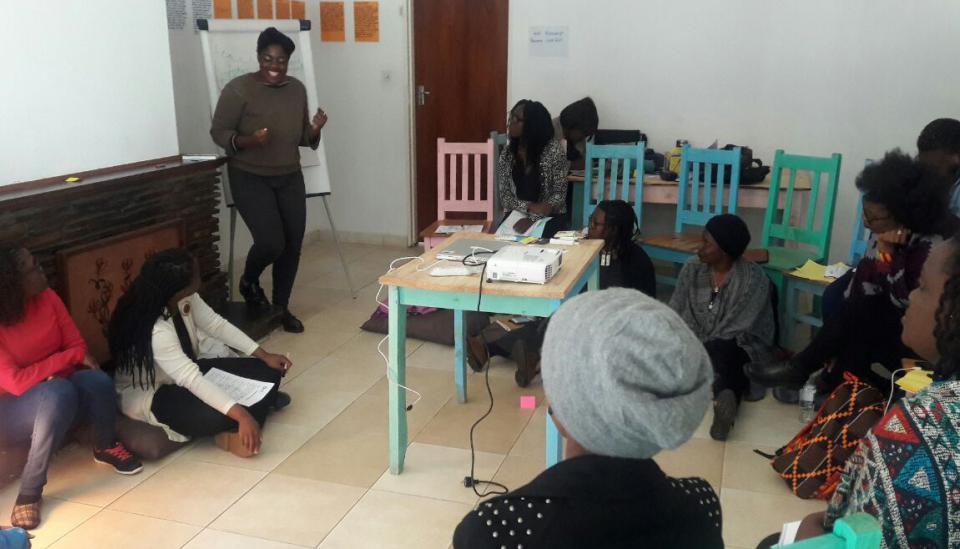](https://explorefpi.apc.org/uploads/images/gallery/2022-06/zim-cityconv-3.jpg)*Image Source: Feminist Internet City Conversation in Harare, 2017. Photograph by [Fungai Machirori](https://twitter.com/fungaijustbeing)*
Conversation is an important means for surfacing different perspectives and experiences about technology. The following activities create spaces for small and larger group discussions that can help folks to deepen their understanding of how technology relates to their environment and their lives.
Read on to learn about:
1. [Hosting an Install Party, by (person) from (country)](#bkmrk-hosting-an-install-p-0)!
2. [Using metaphor surrounding the body and territory, by (person) from (country)!](#bkmrk-using-metaphor-surro)
3. [Feminist Dada Technopoetry, by Juliana from Colombia!](#bkmrk-feminist-dada-techno)
### Hosting an Install Party! \[to be completed\]
*By (person), (country)*
| **Overview** |
| An Install Party is a gathering, firstly, to have fun, but also to collectively install free operating systems on the computers of participants. Using CDs or USB sticks, participants work together to replace their computers’ proprietary operating systems with operating systems from a GNU/Linux distribution. If a problem arises, it is solved by the whole group, although there are usually more experienced installers present to support the process.
If we compare our body to a computer, we could also consider ourselves to be made up of a physical part, like the hardware, and software, which would be the content of our brain and the subjectivity or codes and values that constitute us. Just as hardware and software in a computer communicate with each other through a series of protocols, so our physical bodies and identities are permeated by specific programmes. For example, the dominant operating system on our computers could be Windows, which is organised on the basis of user dependency on corporations, where copying and the modification of code is forbidden. We could understand heteronormativity as a cultural operating system that runs through our bodies, which, just like Windows, is not easy to modify, because its codes have not been opened and seek to preserve binary divisions of gender.
In the same way that an Install Party brings people together to install free operating systems on their computers, this activity brings people together to uninstall dominant cultural systems from our bodies and install alternative cultural systems around gender and other parts of our identity that are open and allow us to share, copy and modify them!
**Who is this activity for?** \[To be completed\]
|
| **Getting started** |
| **Materials needed:**
**Preparation:**
|
| **The activity** |
| The aim of the activity is to make new versions of the concepts that affect, classify and construct us, so that we can adapt them to our experience and replicate them in other spaces. It is a way of hacking what has been given to us as unchangeable and closed, and replacing those systems with concepts that are open and modifiable.
**Some basic concepts to share with participants:**
- **Free and open-source software** – This refers to programmes and applications that can be copied, studied, modified, used freely for any purpose, and redistributed with or without changes.
- **P2P system** – P2P stands for “Peer to Peer.” It is a network structure that indicates the way connections should be made when transmitting information from one machine, or node, to another. In P2P networks, each node is considered a ‘peer’ since they are all equal within the network. Unlike client-server networks where information has to pass through a central server, in P2P, the resources come from each of the nodes and a dedicated connection is used to solve a specific problem (in this case node communication).
**Activity step-by-step** \[to be completed\]
|
### Using metaphor surrounding the body and territory!
*By (person), (country)*
| **Overview** |
| - One-liner what the activity entailed
- Who were the participants
- For what group of people is this activity best suited
|
| **Getting started** |
| **Materials needed:**
**Preparation:**
|
| **The activity** |
| - Introduction
- Activity step-by-step
|
### Feminist Dada Technopoetry!
*By Juliana, Colombia*
| **Overview** |
| Texts are not neutral. Whether technical, narrative, essay or principles, they are written with a limited set of words supposedly known by those to whom these texts are intended. Breaking those texts and approaching them word by word, asking questions about how they are composed, is a way to consciously think and reflect on a particular topic.
Creating with these words without necessarily knowing their context or even their meaning (quite common with technical terminology) is an opportunity to imagine and create a new meaning for them. Can we build a feminist internet from scratch? Probably not, but dada poetry and collage has taught us how to transform reality using what we have and recycling it.
Using an arbitrary word set while thinking about a possible feminist internet may help us to reject some traditional assumptions and freely create their meanings and contexts. This activity uses collage as a way of exploring code, creating texts and unpacking technical terms. It is an analytical and joyful activity. We want to identify the different origins and intentions of words used and create not only new texts but images of possible scenarios.
It has been practiced by trainers in Mexico, Toronto, New York and Bogotá.
**Who is this activity for?** Participants for this activity have been (non-tech) feminist activists, techies and digital rights activists. Basic literacy (reading and writing) in the language of the event is required for this activity. No other technical expertise is needed.
|
| **Getting started** |
| **Materials needed:**
- A word set (or more than one), such as the Feminist Principles of the Internet, Cyborg Manifesto, or digital security guides
*If the activity is conducted in-person:*
- Different coloured papers on which to print or write the words
- A bag in which to mix the word sets
- Paper, glue and markers to compose the poems
*If the activity is conducted online:*
- The software of your preference to convert the text of your choice into an word cloud (this can also be done manually), or alternatively program a gif where the words can appear in sequence
**Preparation**:
*If the activity is conducted in-person:*
- Print one or more word sets (for example, the FPIs) on different coloured papers. Each principle should be on a different colour, or if using more than one word set simultaneously, you can print one word set on colour and another word set on another colour. Make sure the font size is large for ease of use.
- Imagine collecting flyers on the street and then cutting them out. Each one will have a different style, what does this style represent? Play around with different fonts, colours and sizes. Try to preserve the different aesthetic styles of each word set used when you print, and enjoy the diversity you will see at the end!
- Cut each word out separately and place them into a bag. You can mix different word sets or use them separately.
For the activity, you can work on the floor or on a big table. Some words will be lost during the activity, but that is not a problem.
*If the activity is conducted online:*
- Use the software of your choice to create a word cloud from the word set you’ve chosen. Alternatively, you can do this manually be printing and cutting out the words, creating a physical word cloud, and taking a picture of it. Another way of presenting the words is by creating a gif that runs the words one by one in sequence.
- Participants can then select the different words they see appearing on the screen, write them down on a piece of paper and compose with them. Many words will be repeated in different participants’ creations. That is not a problem but is something to talk about.
You can also invite participants to bring their own word sets and image materials to contribute, however, this may confuse the exercise. It is up to you if you decide whether to introduce other materials or not.
|
| **The activity** |
| This activity can be run at any moment during a workshop, even during a break time.
1. Prepare the materials considering carefully what text or word set would be a nice trigger. Trainers practicing this activity in the past have combined texts with heavy technical and feminist terminologies that seem to be very different from one another. What does ‘intersectionality’ mean for a non-feminist techie? Or what does ‘E2EE’ mean for a non-techie feminist?
2. Define a question, a prompt or provocation for the participants who will play. Examples of questions include, What should the internet look like? Or, What will make the internet a pleasant place to be? The question could also be something radically different like, What do you enjoy most about your body?
3. Display the word set on a surface (in-person) or on the screen (online) and invite participants to pick words from the set and start playing with them. Set a time limit for this activity. Remember to say that we are creating poetry. We are not explaining or guessing an answer, we are just playing with arbitrary given words and the primary goal is to enjoy doing it.
4. Share the creations with one another and give time to talk about them. Ask, What happened? This discussion is an important moment of learning among one another. It can raise new questions or open up new approaches to a topic.
The success of the activity lies in remembering that the preparation is both directive and arbitrary. In selecting the word set, you are controlling the system and are in no way neutral. However, allow yourself and the participants to let go, play and enjoy the activity.
|
# Hands-on activities for subversion using technology!
Want to get down and dirty with tech? Touching, holding, pulling apart, building and using technological devices themselves can be a powerful means for exploring unknowns, taking up space and subverting using technology. The following activities can help folks gain confidence handling technology and realise their own capabilities in shaping tech!
Read on to learn about:
1. [Even machines dream: Feminist robots for Twitter, by Stef from Brazil!](#bkmrk-even-machines-dream%3A-0)
2. [Proud Dyke.tech - a master of web technologies, by Maja from Slovenia!](#bkmrk-proud-dyke.tech---a-)
3. [Taking apart your computer, by (person) from (country)!](#bkmrk-taking-apart-your-co)
### Even machines dream: Feminist robots for Twitter
*By Stef, Brazil[](https://explorefpi.apc.org/uploads/images/gallery/2022-06/robotas-feministas-blog-pic.png)*
| **Overview** |
| This activity entails making one (or many) feminist robot(s) for Twitter using generative grammar constructs.
A bot (or robot) is a computer programme that automatically performs repetitive tasks over the internet. Normally, these bots perform simple tasks. When they act together, it is often called a ‘bots farm.’ When used on Twitter, they are rarely influential, but they do help generate trending topics – the topics that Twitter considers ‘hot’ at a certain moment – or generate noise about a topic.
Making and using feminist robots on Twitter is a playful way of making feminist ‘noise’ online, and creating a feminist internet.
Generative grammar, which will be used to create our bots, is a linguistic theory that regards grammar as a system of rules. It generates exactly those combinations of words that form grammatical sentences in a given language.
**Who is the activity for?**
|
| **Getting started** |
| **Materials needed:**
- A digital device such as a computer, tablet or mobile phone
- Internet access
**Preparation:**
- Check in with participants to make sure they can bring their own digital devices to the conversation. If they do not have their own, participants can also work together in pairs or small groups.
|
| **The activity** |
| The activity can be run either in-person or online. Make sure that participants each have the materials needed as stipulated above. Remember to set a time limit for each step of the activity.
[](https://explorefpi.apc.org/uploads/images/gallery/2022-06/cheapbots.JPG)
1. Invite participants to think of a Twitter robot concept. What will be their username (‘@...’)? What cover image, profile image and description will you use?
2. Give participants a moment to create a Twitter account for their bot and with it, log onto Twitter.
3. While logged on Twitter, ask participants to access the website: [https://cheapbotsdonequick.com/](https://cheapbotsdonequick.com/)
4. Instruct participants to click, ‘Sign in with Twitter’
5. Instruct participants to click, ‘Authorise the application’
6. Once your participants have reached the next page, they are ready to create the rules of their bot. They are going to write their code in the space after ‘JSON Tracery.’
7. Trying with an example is the best way to understand how it works. Invite participants to play with different examples, and from there to start creating their own robot. Paste the code that follows into the space and start playing. The code will look something like this:
{
"origin": \["Good day for #action# #something# with #object# #where#"\]
,"action": \["explode","leave","kill","?","?","?","?"\]
,"something": \["Facebook","patriarchy","the machista","?","?","?"\]
,"object": \["scissors","encryption","?","?","?","?","?"\]
,"where": \["in the kitchen","in the car","?","?","?"\]
}
- ‘*Origin’ is where the structure of our sentence comes from.*
- *Everything that is between ‘#’ in ‘origin’ is what is going to get mixed up in the sentence.*
8. With the code there, by clicking ‘refresh,’ participants can look at the possibilities of combinations with the words they have written in their example.
9. Once a participant clicks on ‘Tweet,’ that text will be published in the Twitter account of the tweet.
10. Participants can also select a number of configurations at the bottom left-hand area of the screen, including how long their bot is going to say something on Twitter, whether the bot can reply or not when someone sends it a message, and whether they want to share or not share their code with the public on the Cheap Bots Done Quick website. If a participant chooses to allow their bot to ‘reply’ to messages, explain that they will answer using a combination of words with the same rule that has been created for them.
11. Once the above has been set up, the participants’ bots are ready! Invite them to click ‘Save’ to have the bot active on the Twitter account created for it.
|
### Proud Dyke.tech - a master of web technologies
*By Maja, Slovenia (https://www.22nds.com)
[](https://explorefpi.apc.org/uploads/images/gallery/2022-06/dyke-tech-challenge.JPG)*
| **Overview** |
| Dyke‧tech is a web page where nine web development challenges are featured. They are ordered by their complexity and while participants are solving them they learn about web technologies.
If the participant solves all nine challenges they get a certificate.
Project DYKE‧tech originates from the LGBTIQ community in Slovenia. It was first presented at LGBTIQ in Tech meetup and is an English version of [Lezba‧si](https://www.22nds.com/lezbasi/) – a lesbian who masters computer science – as defined in Slovenian [LGBTQ dictionary](https://www.kulturnicenterq.org/lgbtqslovar/). It is a fun way of exploring web development while being creative, exploring functionalities of web browsers and sharing tips on how to solve the challenges.
The activity has been practiced in Ljubljana, Slovenia and Berlin, Germany.
**Who is this activity for?** The activity is best suited for web developers or those who are curious how websites are built and already have at least a little knowledge about web development.
|
| **Getting started** |
| **Materials needed:**
Laptop (not mobile phone) is needed to be able to look into source code of web pages. Preferably using Mozilla Firefox browser.
**Preparation:**
No preparation for participants is needed. Facilitator should solve the challenges on website [https://www.22nds.com/dyketech/](https://www.22nds.com/dyketech/) before the activity to be able to help participants and be familiar of concepts used in modern web development (browser, source code, design, JavaScript, RegEx, cookies, search engines, data, images).
|
| **The activity** |
| The facilitator should give a little intro into the activity (also available at [https://www.22nds.com/dyketech/about-the-project/](https://www.22nds.com/dyketech/about-the-project/)) and make sure all participants have web site [https://www.22nds.com/dyketech/](https://www.22nds.com/dyketech/) opened in Mozilla Firefox browser.
There are several ways this activity can be run and the choice is based on the proficiency of participants’ web development skills:
1\. *If all participants have a lot of experience and knowledge,* facilitator can block 20 minutes and let everyone start solving the challenges. After 20 minutes everybody shares their progress and if there is anybody that was unable to progress they get additional support to solve the challenge. If needed participants get another 20 minutes to tackle the challenges. Afterwards a review of all the challenges should be made and participants share how they solved it. If some challenges are still unsolved then the facilitator helps with tips (not solutions!) and motivates participants to solve the challenge together.
2\. *If participants are not web developers,* but would like to learn about web technologies, then the challenges should be solved together by the whole group. For every challenge one of the participants is selected to read out loud the text on the web site (the tip that hints where the solution is) and think about the strategies of solving the challenge. Other participants can help and share their thoughts and possible solutions until they find the solution and all group progresses to the next challenge and ultimately solves all challenges. Facilitator should help with tips when the group gets stuck and when participants reach solution facilitator can also point out alternative ways of solving the challenge.
At the end of the activity participants and facilitator can have a discussion about which other challenges could be implemented, what they had learned and which web technology they would like to learn more about in the future.
|
### Taking apart your computer!
*By (person), (country)*
| **Overview** |
| - One-liner what the activity entailed
- Who were the participants
- For what group of people is this activity best suited
|
| **Getting started** |
| - Materials needed
- Preparation
|
| **The activity** |
| - Introduction
- Activity step-by-step
|
# Chapter 4. How to introduce the FPIs
The Feminist Principles of the Internet are an open, living and evolving set of political commitments that act as an expression of the kind of internet we would like to experience, make and be part of shaping! If you are organising a conversation in which you will be introducing the FPIs to folks for the first time, it is important to ensure that how you introduce the FPIs provoke imagination and reveal resonance, both with participants in relation to their contexts, and across participants in relation to each other.
# Intro

The Feminist Principles of the Internet are an **open, living and evolving set of political commitments** that act as an expression of the kind of internet we would like to experience, make and be part of shaping! If you are organising a conversation in which you will be introducing the FPIs to folks for the first time, it is important to ensure that how you introduce the FPIs **provoke imagination and reveal resonance**, both with participants in relation to their contexts, and across participants in relation to each other.
In this chapter we will look at two aspects to your conversation:
- [How to create a presentation about the FPIs](https://explorefpi.apc.org/books/explore-fpis-toolkit/page/creating-a-fpi-presentation "Creating a FPI presentation")
- [How to select and include contextual case studies related to the FPIs](https://explorefpi.apc.org/books/explore-fpis-toolkit/page/how-to-select-and-include-contextual-case-studies-related-to-the-fpis "How to select and include contextual case studies related to the FPIs")
Both the presentation and case studies can be fertile conversation starters, as well as key references for subsequent activities that take place during your event.
# Creating a FPI presentation
When creating your FPI presentation, ask yourself, what is the key message you want to bring across that is most relevant to the work or experiences of your participants? For example,
- You may want to emphasise in your conversation the role that women, gender-diverse and queer persons have played in shaping technology. Your presentation could therefore focus on the history of the FPIs and the diverse group of activists that created them.
- If your participants are unfamiliar with approaching technology through a feminist lens, you may want to emphasise the usefulness of having a feminist framework for understanding and exploring issues related to the internet.
- Depending on what is happening in your context at the time of your conversation, you may want to give a broad overview of all the FPI clusters, or focus on one cluster specifically in relation to a current political moment.
Sections you may want to include in your presentation can be the following:
| [**1. Overview**](#bkmrk-section-1%3A-overview)
What are the FPIs?
History of the FPIs
| [**2. A feminist approach to the internet**](#bkmrk-section-2%3A-a-feminis)
What is a feminist approach to the internet?
Why use a feminist approach?
| [**3. Clusters**](#bkmrk-section-3%3A-clusters)
The clusters’ relations with different manifestations of power
The interrelatedness of clusters
| [**4. Examples of the FPI’s relevance to your context**](#bkmrk-section-4%3A-examples-)
Either cluster by cluster, or related to a specific cluster on which you would like to focus your conversation
|
[](https://feministinternet.org/)
**[https://feministinternet.org/](https://feministinternet.org/)**
Access the FPI website for information about the FPIs, including their history, an articulation of the clusters, and examples of their use in different contexts around the world! Below are some important points that you can consider including in your presentation of the FPIs.
#### **Section 1: Overview**
##### What are the FPIs?
When giving an overview of what the principles are, it is important to emphasise that they do not exist in isolation but are grounded in contextual politics that defines the internet we want. As such, they are:
- a set of political commitments that informs our approach to our activism, both locally and globally, and
- a framework to articulate and explore current issues related to technology, helping us to identify connections between what is happening across local contexts, and between what is happening globally, regionally and locally.
##### History of the FPIs

The FPIs were originally drafted at a global meeting on gender, sexuality and the internet organised by the Association for Progressive Communications (APC), held in Port Dickson, Malaysia in 2014 by women’s, sexual rights and digital rights activists from the global South.
The FPIs are feminist not only in their demands, but in how they came to be! The history of the FPIs is therefore intrinsic to the politics of the FPIs themselves. It is important to note that:
- They were formed out of a participative process of Open Space dialogue that sought to explore the question, ‘As feminists, what kind of internet do we want, and what will it take for us to achieve it?’
- The FPIs were created as a resistance to the homogenising and patriarchal way in which key technology-related issues that affect feminist organising were being framed. We wanted a global South feminist framework for exploring and articulating these issues.
#### **Section 2: A feminist approach to the internet**
##### What is a feminist approach to the internet?
A feminist approach to the internet requires the consideration of two key concepts:
- **Intersectionality**: You’ve heard the phrase, “There is no such thing as a single-issue struggle, because we do not live single-issue lives” (Audre Lorde). Intersectionality does not only consider the multifaceted nature of human identity, but also how social and political structures make certain identities vehicles for power or for vulnerability.
- **Contextual relevance**: The lens through which we seek to identify and address internet-related challenges is useless if it does not respond to the needs and priorities of those most impacted. A feminist approach to the internet recognises that we are the experts of our own lives, and that lived experience is a critical repository of knowledge. It ensures that the lived experiences of women, gender-diverse and queer folk remain at the centre of our interrogation and decision-making in relation to the internet.
##### Why use a feminist approach to the internet?
The FPIs, as a feminist approach to the internet, offer a lens that uncovers the **deeply contextual and intersectional nature** of issues, while at the same time, allows for common concerns across contexts to be surfaced and inform our responses to those concerns.
A feminist approach to the internet is important, because it:
- Acknowledges that the internet and the spaces within it are not neutral. How the internet is designed enforces and perpetuates our access to power and our vulnerabilities, our inclusion in certain space and our exclusion from others.
- Helps us to understand how our identities, privileges and positionalities influence our ability to access and shape the internet.
- Provides a politics through which we can centre the lived experiences of women, gender-diverse and queer folk in relation to technology in how we approach decision-making about the internet
> “From falling in love to demanding accountability from our government, \[the internet\] is becoming part of the texture of our everyday social, political, economic, and cultural life. It’s not just an inert tool that we wield when we have access to it, but a space where things happen, where identities are constructed, norms reified or disrupted, action and activities undertaken. As such, it cannot help but be a space of intersectionality where many things collide and connect.” – Jac SM Kee
#### **Section 3: Clusters**
The FPI clusters – access, expression, embodiment, economy and movements – are tools for articulating a framing of power and its intersections with the creation, use and expansion of the internet.
##### Clusters’ relation to different manifestations of power
The clusters speak to five manifestations of power related to the internet.
- **Access and structural power: **The principles of access question who has power over internet infrastructure, challenge attempts to monopolise structural power, and is a lens through which we can think strategically of how structural power can be decentralised.
- **Expression and discursive power:** The internet gives us the capacity to create and share our truths and our knowledge. The principles of expression condemn attempts to take away discursive power from marginalised communities and reveals the damaging effects of online spaces when they are shaped by dominant narratives.
- **Economy and economic power:** The principles of economy assert a resistance to corporate control of the internet and creates space for conversations to consider alternative economic models of operation that share and distribute economic power.
- **Embodiment and embodied power:** The embodiment principles recognise the power that exists in being able to navigate the internet anonymously, privately and without restriction. The cluster therefore pushes back against all attempts to privatise the internet and confronts corporate and government action to increase surveillance online.
- **Movements and networked power:** The internet allows us to connect with one another, expand our networks, organise and grow social movements across space and time. The movements cluster is therefore invested in opening up online civic space, and ensuring that activists are able to participate in the shaping of policies that govern the internet.
##### Interrelatedness of clusters
It is important to note that the principles, both within and across the clusters, are interrelated: **they can be combined and refer to one another**. The FPIs are also a continuously evolving vocabulary, remaining open for transformation and reflection. Take a moment to ask your participants,
- In what ways are the clusters of principles holding resonance with your own experiences of the internet?
- What is missing from the principles? Do you see any gaps?
- Can you think of examples in our local history, activism or political environment for which the FPIs can help inform our perspective on those issues? Which cluster or clusters speak to that example?
#### **Section 4: Examples of the FPI’s relevance to your context**
Giving examples using real-life situations of the FPI’s relevance to your context is an important means for **ensuring participants understand how the FPIs relate to their lives and their activism**. In the next section, we will explore how to select real-life case studies and have a conversation around them.
You can choose to include these case studies as part of your presentation, or integrate them into a follow up activity once you have attended to any questions from your participants about the FPIs. If you would like to integrate them into a follow up activity, [check out some fun, feminist methodological processes](https://explorefpi.apc.org/books/explore-fpis-toolkit/page/stories-from-the-field "Stories from the field") that have been used by organisers of local conversations in the past as a way of entering into those conversations, available at the end of this chapter!
# How to select and include contextual case studies related to the FPIs
| ##### *Reflection exercise!*
As you prepare for your conversation, reflect on some of the local issues that you and those around you face in your context related to the internet and digital technologies. For example,
- Does your country experience internet shutdowns?
- To what extent does your government censor internet content?
- Have participants in the room experienced harassment, surveillance, or any form of violence online?
- How has the increased use of marketplace databases and on-demand service apps affected the distribution of economic power in your country?
- How does the increasing power of big tech companies impact the ability to remain anonymous online?
- How do digital technologies enable or restrict local activism?
|
There will be many ways in which the FPIs and their clusters might apply to different challenges you face in your context. As a result, it can be difficult to decide which issues to raise, which case studies to use as examples, and how to have a conversation about them.
Let’s look at how to surface some of the issues experienced in your context, and then at how to select and have a conversation about case studies related to those issues.
#### Surfacing issues experienced in your context
Remember, a key objective from this part of your conversation should be ensuring that participants come away with a strong understanding of **how the FPIs relate to their work and their lives**. As such, it is always important to start surfacing issues from the positionalities of your participants, as opposed to saying upfront as facilitator what those issues could include generally.
Getting participants to reflect on the connections between the FPIs and their lives comes down to asking the right questions! If folks are hearing about the FPIs for the first time, it can be easy for them to feel like they have no knowledge to share in a discussion about the FPIs or the politics of the internet. Asking broad generalised questions - such as, *‘How is the principle of Access challenged in different parts of the world?’* or, *‘Why is the principle of Anonymity important?’* - will often render generalised answers, that stifle the direction of the conversation to go deeper. Furthermore, many may not know how to answer, or may feel like the FPIs do not apply to them.
However, when you **ask participants about their experiences**, this
- immediately makes the FPIs relatable
- situates the FPIs within the lives of participants
- brings every participant down to the same level of expertise, since everyone is an expert of their own lives
- creates space for participants to find resonance with the experiences of one another
**Asking folks about their experiences ensures deeper and more participative conversations!**
So, how do we ask questions about participants’ experiences that entice their curiosity and spark in-depth debate? There are three key factors to consider that will inform the kinds of questions you ask:
1. **Who is in the room?** To what movements, unions, communities or occupations do your participants belong? Are your participants journalists? Coders? Are they abortion rights activists or part of workers’ union? Do your participants represent a gender-diverse community, or are they residents of the same neighbourhood?
2. **Where is the conversations being held?** Is the conversation a national one or a hyperlocal one? What country, city or neighbourhood are you hosting from? Is the conversation taking place online, with folks representing many geographical places, but from a common movement?
3. **What brought you all together to have a conversation about the FPIs in the first place?** What was the purpose negotiated between yourself and your participants at the beginning of your conversation, for bringing you together? What do you collectively want to achieve?
Your answers to these questions will help guide your decision around the kinds of questions you ask your participants about their experiences of using technology in their fields of work, activism and lives. For example, if your conversation has journalists present that often face threats or intimidation from government, a question you may ask could be, *‘As a journalist in your country, what apps do you prefer to use to communicate with your sources and why?**’* If your conversation has attracted more of a techie crowd of web developers or coders, a question you could ask is, *‘Have you ever created a pseudonym for yourself online out of a need or desire to be elusive or anonymous? What was it? What was the reason?’*
If the conversation becomes generalised, bring participants back to their experiences by asking them to **tell stories** of specific scenarios! As stories are recounted, make a note of each one using a flipchart that folks can see, or a shared online notepad to which everyone has access.
For each story, note down the key issue, as well as what happened in the participants’ experiences.
#### How to select and have a conversation about case studies
By the end of the previous discussion, you would have noted a number of stories from the experiences of different participants. These stories may have expanded conversations to other examples of similar events, or have led participants in the room to discover similarities in their experiences confronting the same issue. **Whether from the lives of participants, or examples given from the floor of similar events, these stories are your case studies!**
Take a moment to observe any **commonalities** that are arising in the stories being told, or any similarities in the challenges being surfaced. Depending on the amount of time you have allocated for this part of your conversation, select one or more case studies that seem to have the most resonance among the experiences of participants.
It is now time to take the conversation back to the FPIs and how they relate to the experiences that have just been shared. This can be done collectively, or you can split participants into groups to speak about a case study each.
For each case study, **ask questions that will lead to exploring and interrogating the issues at hand from a feminist perspective****.** The questions around each case study can include, for example:
- To which cluster or principles does the case study relate? Does it relate to a single cluster or principle or is it at the intersection of two or more clusters or principles?
- In the selected case study, what technology was involved?
- Who was in control? What was their intention?
- What was the key barrier / challenge to / opportunity for the FPIs being realised in the case?
- Who was most impacted? How?
- Did the scenario create more ways and spaces to be / express / organise / gain autonomy online? If so, in what ways?
- Did the scenario affect you, either positively or negatively? If so, how?
There are numerous methodological processes for drawing out responses to these questions. We have put together **a growing repository of stories from the field**, or methodological processes, that organisers of previous local conversations from around the world have used! Gather ideas from the [next section (Stories from the field)](https://explorefpi.apc.org/books/explore-fpis-toolkit/page/stories-from-the-field "Stories from the field")!
# Stories from the field
#### Cape Town, South Africa:
In 2016, a local conversation was held in Cape Town, South Africa on the Feminist Principles of the Internet and the use of ICTS for movement building. The participants included folks from sex workers movements, digital rights activists and girl-led young women’s rights collectives. In a conversation specifically about *access*, one case study the conversation explored was sex workers’ use of mobile phones for preventing gender-based violence.
**Case study: **Sex workers, especially those who work on the street, are frequently subjected to harassment, abuse and assault from their clients and the police. As a result, those working in the same or nearby neighbourhoods have organised by creating WhatsApp groups in which they share details, such as car and person descriptions, of abusive clients or alert their colleagues of police presence. Sex workers’ access to such communication hubs of crowdsourced information has played a role in preventing their exposure to violence.
**Methodological process: **As a means of opening up discussion around the case study, the sex workers in the room created a talkshow-style activity, which they set up in front of the other participants, who were the audience. One sex worker, as the host, interviewed their colleagues, asking them questions around how they use their phones to protect themselves from violence, and invited them to tell stories of moments in which it proved effective.
After the activity, the plenary discussion that followed not only led participants to consider how access to mobile phones, in the case of sex workers confronting violence, was crucial for sex workers’ safety, but also how that access led to possibilities for collective organising, support and solidarity.