# Who to bring together
[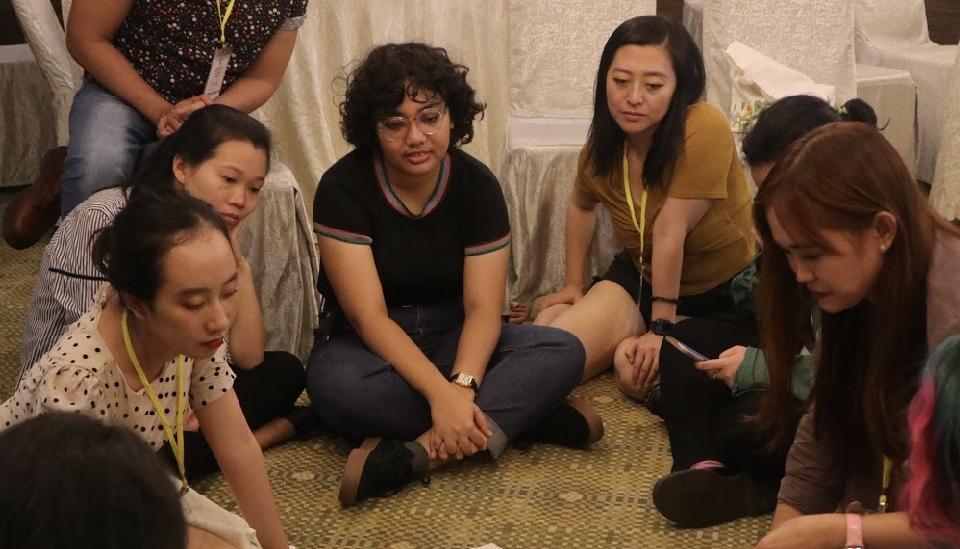](https://explorefpi.apc.org/uploads/images/gallery/2022-06/feministinternetsouthasiaconvening.jpeg)*Image description: Women and girls sitting on floor, at the Imagine a Feminist Internet South East Asia regional convening. Image source: Foundation for Media Alternatives, Philippines*
We want a space that is **magnificently feminist**, right? Creating a feminist space is about the **inclusion of diverse voices**. A diversity of perspectives is also key for conversations about technology, which we know intersects with all aspects of our lives and activism. Here are some ways diversity can be enhanced:
- **Invite activist voices across movements**: Having voices other than those from your own movement can enhance the richness of conversations by bringing different perspectives and ideas. Inviting folks from different movements and sectors also stokes **cross-movement building** that can strengthen learning, solidarity and advocacy.
- **Invite voices from different locations in their movement**: Our movements are made up of a constellation of actors that include individuals, collectives and organisations working at local, national, regional and international levels. Some hold more power in their spaces of activism than others. Some see broad patterns from working fluidly across different capacities, while others have deeply rooted insight of specific spaces from their longstanding work in a particular position. Inviting folks from different locations can nurture **holistic conversations around the intersecting experiences** of working around certain issues.
#### **Deciding who to invite**
Who you wish to bring together will also depend on your objectives for the conversation. Here are some questions to help you make decisions about who to invite:
- Whose presence do you want to prioritise in this moment? If your focus for the conversation is on the intersection of technology and sexuality, for example, you will want to have the majority of participants be folks working in the area of sexuality.
- If you have hosted a similar convening before, you may want to reflect on, who have you brought together in the past? Who did you feel was missing?
- How wide is the network you want to bring together? Do you want to have this conversation with activists in your street? In your neighbourhood or community? Or with activists from across your city?
| ##### *Things to be aware of when bringing people together:*
Remember! **People hold power.** Organising a healthy conversational space that holds true to your reason for bringing people together requires you to **be strategic about safety**.
- Would the activists you invite feel safe with funders in the room?
- Do you want to include men?
- Do you belong to a marginalised community, and want the conversation to be specifically among folks that share the same or similar marginalisations?
- Do you want to include charismatic or influential leaders from your movement?
- If you are organising the conversation with a team, make sure the number of team members is less than the number of those who have been invited.
|
#### **Different ways for inviting folks**
Now that you have an idea of who to bring together, there are a number of ways you can consider inviting folks. Here are some questions to guide your decision-making:
- Do you want to host a closed conversation, or make the invitation public?
- Are there specific people you want to invite, or do you want to extend the invitation to people beyond your network?
- How many people would you like to host, or have the capacity to host?
Depending on the answers to the questions above, you may decide to reach out to specific people, send out an open invitation to trusted networks, or create a call for applications.
If you decide to select participants based on applications, make sure you have a diverse selection team and communicate with applicants about the selection process to ensure transparency.
\[insert link to an appendix/resources section that includes an adapted spreadsheet from last MFI on criteria for selection\]
#### **Needs assessments**
Once you have confirmed your participants, sending them a needs assessment form before the start of the event can help folks feel **included, seen and comfortable**. The responses you receive will enable you to be aware of people’s needs and guide subsequent decision-making on logistics.
| ##### *Examples of what you really need to know about participants’ needs:*
- Do they need financial support to be able to attend?
- Do they have children or care responsibilities that require their attention at particular hours or on particular days?
- Do they have access to transport to the venue, or access to data in the event of the conversation taking place online?
- Do they have accessibility requirements due to a disability?
- Will there be language diversity at the event that requires the presence of translators?
- What are their dietary needs?
|
\[insert link to an appendix/resources section that includes an adapted needs assessment form template\]